



2025
Shoolini University has demonstrated a strong commitment to Education for Sustainable Development (ESD) by systematically integrating the United Nations Sustainable Development Goals (SDGs) into its undergraduate, postgraduate and doctoral academic programmes. During 2025, the University aligned 58 academic programmes and 43 open elective courses with specific SDGs, promoting interdisciplinary learning and sustainability-oriented competencies. The curriculum addresses critical global priorities, including climate action, clean energy, water conservation, food security, public health, environmental protection, gender equality and inclusive economic growth. Through its choice-based credit system, students gain opportunities to explore sustainability-focused electives, develop practical knowledge and strengthen their understanding of global challenges. By combining specialised academic programmes, research opportunities, skill development and experiential learning, Shoolini University empowers students to become responsible professionals and future sustainability leaders. These initiatives reinforce the University's commitment to SDG 4 (Quality Education) and contribute to advancing a more inclusive, resilient and sustainable future.
|
Education for SDGs commitment to meaningful education |
|
|
Education for SDGs: specific courses on sustainability |
The University's commitment to sustainable development is reflected in programmes across disciplines, including Energy Technology, Environmental Sciences, Water Management, Agriculture, Food Technology, Biotechnology, Pharmaceutical Sciences, Psychology, Civil Engineering, Economics, Human Rights, and International Relations.
LIST OF PROGRAMMES ADDRESSING SUSTAINABLE DEVELOPMENT GOALS
|
S. No. |
Programme Name |
Relevant SDG(s) |
|
1 |
PhD Energy |
SDG 7: Affordable and Clean Energy |
|
2 |
PhD Environmental Sciences |
SDG 13: Climate Action |
|
3 |
PhD Water Management |
SDG 6: Clean Water and Sanitation |
|
4 |
PhD Human Rights |
SDG 16: Peace, Justice, and Strong Institutions |
|
5 |
PhD IPR |
SDG 9: Industry, Innovation, and Infrastructure |
|
6 |
PhD Alternative Dispute Resolution |
SDG 16: Peace, Justice, and Strong Institutions |
|
7 |
PhD Agriculture (Agronomy, Agricultural Extension) |
SDG 2: Zero Hunger; SDG 15: Life on Land |
|
8 |
PhD Applied Economics |
SDG 8: Decent Work and Economic Growth |
|
9 |
PhD Cancer Biology |
SDG 3: Good Health and Well-being |
|
10 |
PhD Civil Engineering |
SDG 9: Industry, Innovation, and Infrastructure |
|
11 |
PhD Disaster Management |
SDG 11: Sustainable Cities and Communities |
|
12 |
PhD Economics |
SDG 8: Decent Work and Economic Growth |
|
13 |
PhD Food Technology |
SDG 2: Zero Hunger |
|
14 |
PhD Legal Sciences |
SDG 16: Peace, Justice, and Strong Institutions |
|
15 |
PhD Pharmaceutical Sciences (Pharmaceutics, Pharmacology) |
SDG 3: Good Health and Well-being |
|
16 |
PhD Psychology |
SDG 3: Good Health and Well-being |
|
17 |
PhD Public Relations |
SDG 16: Peace, Justice, and Strong Institutions |
|
18 |
PhD Yoga |
SDG 3: Good Health and Well-being |
|
19 |
PhD Biotechnology |
SDG 9: Industry, Innovation, and Infrastructure |
|
20 |
PhD Microbiology |
SDG 3: Good Health and Well-being |
|
21 |
M Tech Climate Science and Sustainable Development |
SDG 13: Climate Action |
|
22 |
M Pharmacy |
SDG 3: Good Health and Well-being |
|
23 |
M Tech Civil |
SDG 9: Industry, Innovation, and Infrastructure |
|
24 |
M Tech Energy Technology |
SDG 7: Affordable and Clean Energy |
|
25 |
M Tech Food Technology |
SDG 2: Zero Hunger |
|
26 |
MA/MSc Psychology |
SDG 3: Good Health and Well-being |
|
27 |
MBA Food Technology |
SDG 2: Zero Hunger |
|
28 |
MBA International Relations |
SDG 17: Partnerships for the Goals |
|
29 |
MBA Pharma and Healthcare Management |
SDG 3: Good Health and Well-being |
|
30 |
MSc Agriculture (Agricultural Economics) |
SDG 2: Zero Hunger |
|
31 |
MSc Agriculture (Agricultural Extension Education) |
SDG 2: Zero Hunger; SDG 15: Life on Land |
|
32 |
MSc Environmental Sciences |
SDG 13: Climate Action |
|
33 |
MSc Food Technology Research |
SDG 2: Zero Hunger |
|
34 |
MSc Nutrition and Dietetics |
SDG 3: Good Health and Well-being |
|
35 |
MSc Yoga |
SDG 3: Good Health and Well-being |
|
36 |
M Tech Biotechnology |
SDG 9: Industry, Innovation, and Infrastructure |
|
37 |
MBA Biotechnology |
SDG 9: Industry, Innovation, and Infrastructure |
|
38 |
MSc Biotechnology Research |
SDG 9: Industry, Innovation, and Infrastructure |
|
39 |
MSc Microbiology Research |
SDG 3: Good Health and Well-being |
|
40 |
MBA Digital Marketing |
SDG 8: Decent Work and Economic Growth |
|
41 |
MBA Marketing |
SDG 8: Decent Work and Economic Growth |
|
42 |
B Tech Food Technology Research |
SDG 2: Zero Hunger |
|
43 |
B Tech Renewable Energy & Sustainability |
SDG 7: Affordable and Clean Energy |
|
44 |
BTech Environmental Sustainability |
SDG 13: Climate Action |
|
45 |
BA (Hons) Liberal Arts Economics and Finance |
SDG 8: Decent Work and Economic Growth |
|
46 |
BA (Hons) Liberal Arts Psychology and Counseling |
SDG 3: Good Health and Well-being |
|
47 |
BA/BSc Behavioral & Neuro Psychology |
SDG 3: Good Health and Well-being |
|
48 |
BSc (Hons) Agriculture |
SDG 3: Good Health and Well-being |
|
49 |
BSc (Hons) Food Technology Research |
SDG 2: Zero Hunger |
|
50 |
BSc Nutrition and Dietetics |
SDG 2: Zero Hunger |
|
51 |
BSc/BA Yoga |
SDG 3: Good Health and Well-being |
|
52 |
B Pharmacy |
SDG 3: Good Health and Well-being |
|
53 |
B Tech Civil |
SDG 9: Industry, Innovation, and Infrastructure |
|
54 |
BBA (Rural Management) |
SDG 16: Peace, Justice, and Strong Institutions |
|
55 |
B Tech Biotechnology Research |
SDG 9: Industry, Innovation, and Infrastructure |
|
56 |
BSc (Hons) Biotechnology Research |
SDG 9: Industry, Innovation, and Infrastructure |
|
57 |
BSc (Hons) Industrial Microbiology |
SDG 9: Industry, Innovation, and Infrastructure |
|
58 |
BSc (Hons) Microbiology Research |
SDG 9: Industry, Innovation, and Infrastructure |
Open Elective Courses Addressing the UN Sustainable Development Goals
Shoolini University integrates the Sustainable Development Goals (SDGs) into undergraduate education through its comprehensive choice-based credit system. Mandatory open electives provide students with opportunities to select courses related to sustainability and specific SDGs. These courses promote interdisciplinary learning and help students develop knowledge and awareness of sustainability, social responsibility, environmental protection, health, and inclusive development.
Shoolini University's published list of electives addressing SDGs:
|
Sr. No. |
Course Name |
Course Code |
Programme |
Relevant SDG(s) |
|
1 |
Sustainable Leadership for Environmental Happiness |
CSU2034 |
UG |
SDG 13 – Climate Action; SDG 17 – Partnerships for the Goals |
|
2 |
Future Leaders Program: Enhancing Leadership through Coaching Skills (ICF) |
CSU2026 |
UG |
SDG 4 – Quality Education; SDG 8 – Decent Work and Economic Growth |
|
3 |
News Presentation Skills |
CSU2017 |
UG |
SDG 4 – Quality Education |
|
4 |
Introduction to IPR (Intellectual Property Rights) |
CSU987 |
UG |
SDG 9 – Industry, Innovation and Infrastructure |
|
5 |
Home Appliances Technology |
CSU2038 |
UG |
SDG 9 – Industry, Innovation and Infrastructure |
|
6 |
Applications of 3D Modelling |
CSU2018 |
UG |
SDG 9 – Industry, Innovation and Infrastructure |
|
7 |
Future Automobiles |
CSU2019 |
UG |
SDG 9 – Industry, Innovation and Infrastructure |
|
8 |
Sustainable Energy Solutions |
CSU2020 |
UG |
SDG 7 – Affordable and Clean Energy |
|
9 |
Rewiring the Brain |
CSU2021 |
UG |
SDG 3 – Good Health and Well-being |
|
10 |
Life Skills Training |
CSU716 |
UG |
SDG 4 – Quality Education |
|
11 |
Science of Beverages |
CSU635 |
UG |
SDG 3 – Good Health and Well-being |
|
12 |
Food Safety and Hygiene |
CSU636 |
UG |
SDG 3 – Good Health and Well-being |
|
13 |
Music Appreciation |
CSU1004 |
UG |
SDG 3 – Good Health and Well-being |
|
14 |
Diction and Urdu Poetry |
CSU2023 |
UG |
SDG 4 – Quality Education |
|
15 |
Introduction to Physical Education |
CSU2024 |
UG |
SDG 3 – Good Health and Well-being |
|
16 |
Sustainable Tourism in the Himalayas |
CSU655 |
UG |
SDG 8 – Decent Work and Economic Growth |
|
17 |
The Economic Way of Thinking |
CSU654 |
UG |
SDG 8 – Decent Work and Economic Growth |
|
18 |
Developing an Entrepreneurial Mindset |
CSU665 |
UG |
SDG 8 – Decent Work and Economic Growth |
|
19 |
Developing Leadership Competencies |
CSU656 |
UG |
SDG 4 – Quality Education |
|
20 |
Hospitality Fusion: Design, Dollars, & Digital |
CSU1825 |
UG |
SDG 8 – Decent Work and Economic Growth |
|
21 |
Military Communication |
CSU2035 |
UG |
SDG 16 – Peace, Justice and Strong Institutions |
|
22 |
NCC Practical VI (Skillful Level) |
CSU2036 |
UG |
SDG 16 – Peace, Justice and Strong Institutions |
|
23 |
Drug Discovery and Drug Development |
CSU849 |
UG |
SDG 3 – Good Health and Well-being |
|
24 |
Community Health and Medicine |
CSU850 |
UG |
SDG 3 – Good Health and Well-being |
|
25 |
Introduction to Gender Studies |
CSU668 |
UG |
SDG 5 – Gender Equality |
|
26 |
Ecology and Environment History |
CSU715 |
UG |
SDG 13 – Climate Action |
|
27 |
Ek Upanyaas aur Natak ka Adhayan |
CSU1561 |
UG |
SDG 4 – Quality Education |
|
28 |
Kavita, Natak aur Sanchar Kaushal |
CSU1562 |
UG |
SDG 4 – Quality Education |
|
29 |
Introduction to Chinese Culture and Mandarin |
CSU2047 |
UG |
SDG 17 – Partnerships for the Goals |
|
30 |
Advanced Mandarin |
CSU2037 |
UG |
SDG 17 – Partnerships for the Goals |
|
31 |
German Language for Business |
CSU2025 |
UG |
SDG 17 – Partnerships for the Goals |
|
32 |
Right to Information |
CSU865 |
UG |
SDG 16 – Peace, Justice and Strong Institutions |
|
33 |
Human Rights Law |
CSU866 |
UG |
SDG 16 – Peace, Justice and Strong Institutions |
|
34 |
Agristartups |
AGRM113 |
UG |
SDG 2 – Zero Hunger |
|
35 |
Agriwaste Management |
AGRM22 |
UG |
SDG 12 – Responsible Consumption and Production |
|
36 |
Introductory Biotechnology and Microbiology |
CSU2027 |
UG |
SDG 3 – Good Health and Well-being |
|
37 |
Industrial Biotechnology and Microbiology |
CSU2028 |
UG |
SDG 9 – Industry, Innovation and Infrastructure |
|
38 |
Climate Crisis: Issues, Impacts & Adaptations |
CSU1429 |
UG |
SDG 13 – Climate Action |
|
39 |
Biology of Cells |
CSU1775 |
UG |
SDG 3 – Good Health and Well-being |
|
40 |
Cloud Foundations |
CSU2031 |
UG |
SDG 9 – Industry, Innovation and Infrastructure |
|
41 |
Thinking Unboxed: Strategies for Critical Analysis |
CSU2029 |
UG |
SDG 4 – Quality Education |
|
42 |
Science of Happiness |
CSU2032 |
UG |
SDG 3 – Good Health and Well-being |
|
43 |
Ayurveda for Wellness and Happiness |
CSU2033 |
UG |
SDG 3 – Good Health and Well-being |
2023
University’s Commitment to Meaningful Education Around the SDGs
Shoolini University is firmly dedicated to delivering high-quality education that aligns with the United Nations Sustainable Development Goals (SDGs). In pursuit of educational excellence, the university has established a comprehensive choice-based credit system complemented by mandatory open electives for all undergraduate programs. These educational initiatives aim to cultivate a thorough understanding of sustainability challenges while equipping students with essential skills and knowledge for creating a sustainable future.
The university extends learning beyond traditional classroom boundaries by conducting specialized workshops and engaging extracurricular activities centered on sustainability and SDGs, providing students with valuable practical experience and experiential learning opportunities.
The following initiatives demonstrate Shoolini University's dedication to advancing Education for the SDGs:
1. Integration of SDGs into the Curriculum:
- The university employs a comprehensive choice-based credit system with mandatory open electives across all undergraduate programs, enabling students to select courses that directly support SDGs and sustainable development principles.
- Specialized open elective courses have been carefully designed to address specific SDGs, ensuring students receive targeted education aligned with global sustainability objectives.
2. Research Focus on Sustainable Development:
Evidence: Shoolini University Research Policy
- The university maintains a robust research framework across undergraduate, postgraduate, and doctoral programs, addressing critical sustainable development challenges through systematic investigation.
- Special emphasis is placed on sustainable development research within the Himalayan Region, with researchers encouraged to develop locally relevant sustainable solutions.
- All research initiatives are strategically aligned with SDGs, ensuring meaningful contributions to global sustainable development objectives.
3. Student Engagement and Leadership Development (Social projects):
Report of key student-led social projects organized during the year:
Throughout the year 2023, Shoolini University actively engaged its students in various social projects aimed at fostering leadership skills, social responsibility, and community engagement. These activities provided students with valuable opportunities to develop their leadership potential while contributing to the well-being of the wider community.
· The university creates numerous opportunities for students to participate in SDG-focused initiatives, enabling direct contribution to sustainable development goals.
· Students are mentored to become sustainability leaders through targeted skill development and cultivation of environmental responsibility.
· The Faculty of Management Sciences and Liberal Arts incorporates practical social projects addressing SDG-related challenges, allowing students to apply theoretical knowledge in real-world contexts.
The following case studies highlight some of the notable initiatives undertaken by Shoolini University:
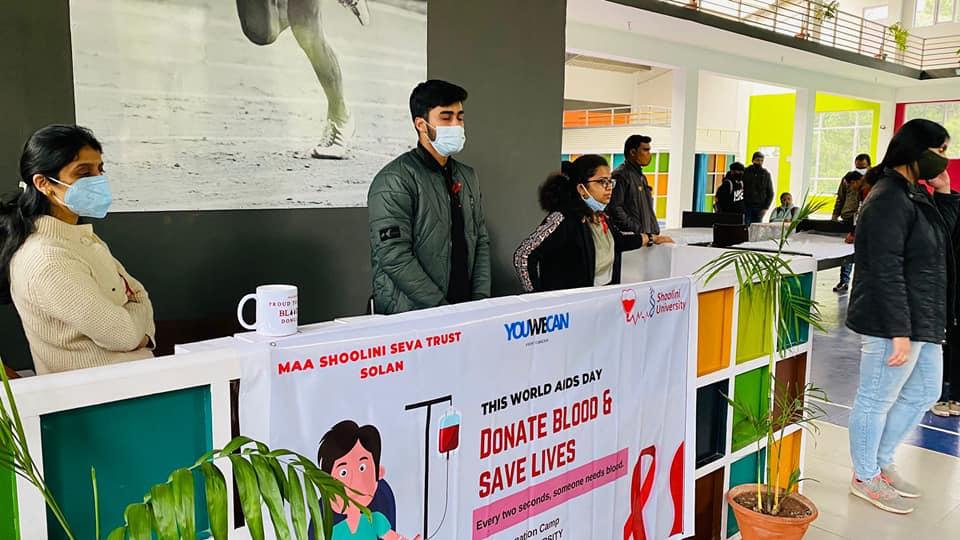
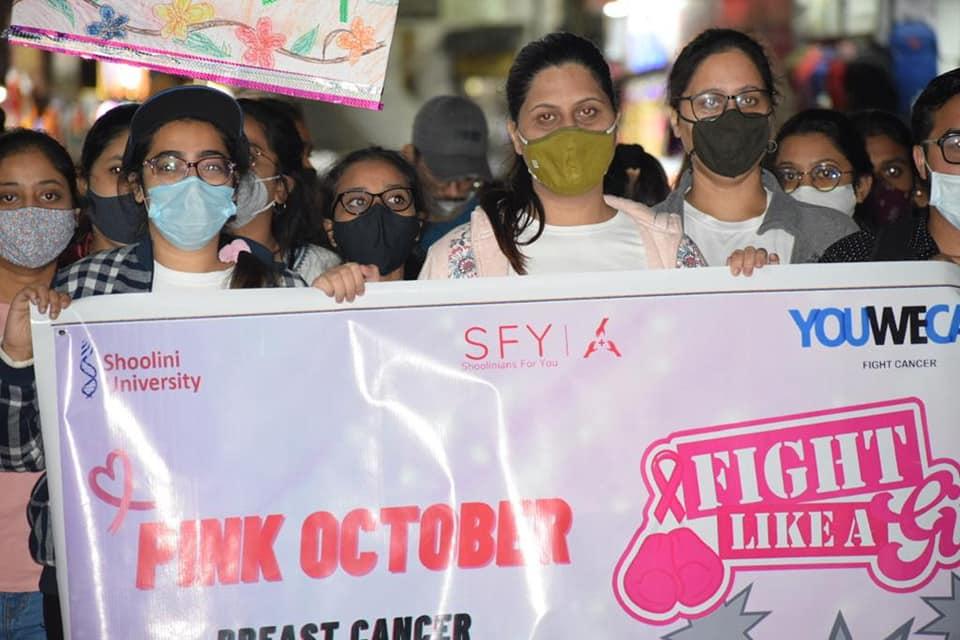
Health and Well-being Initiatives: Collaborating with organizations like Yuvraj's Cancer Foundation YouWeCan, Shoolini University has actively participated in health awareness and detection camps. These programs covered various ailments like breast, cervical, and oral cancer, with thousands of individuals receiving free check-ups and valuable health information. By involving students in these initiatives, the university has fostered a sense of social responsibility and an understanding of community health challenges.
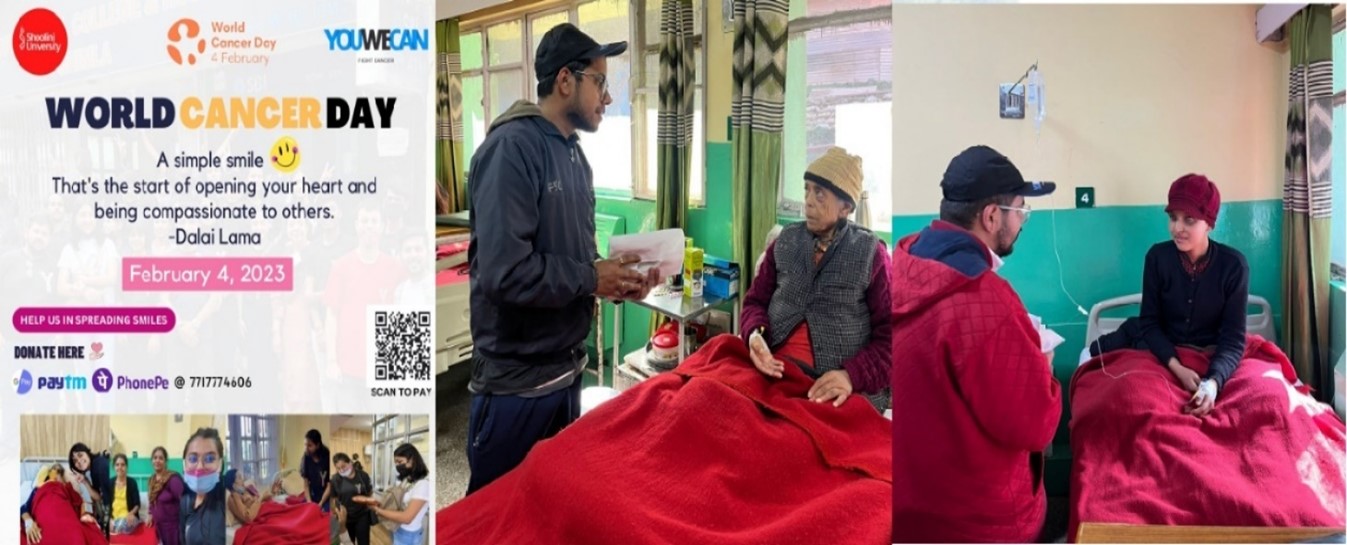
Indira Gandhi Medical College Cancer Ward Visit (Link)
Campaigns on Drug Abuse: Recognizing the escalating problem of drug and tobacco abuse, Shoolini University has initiated multiple campaigns to address this social issue. Through street plays, counseling sessions, and student-led interactions, these campaigns have reached hundreds of youths and adults, providing education and support to deter substance abuse. These campaigns have not only raised awareness but have also empowered students to take a stance against this social menace.
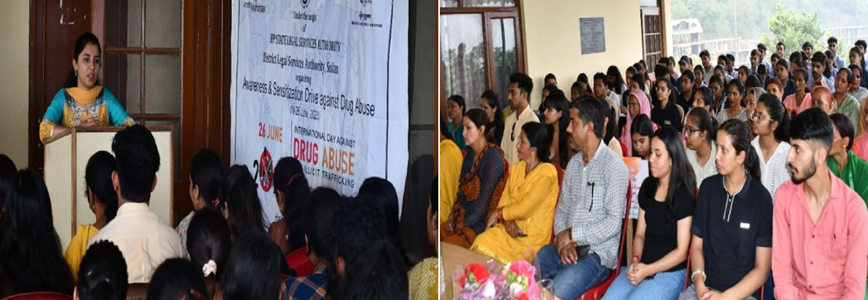
Awareness Session on Drug Abuse in nearby villages (Link)
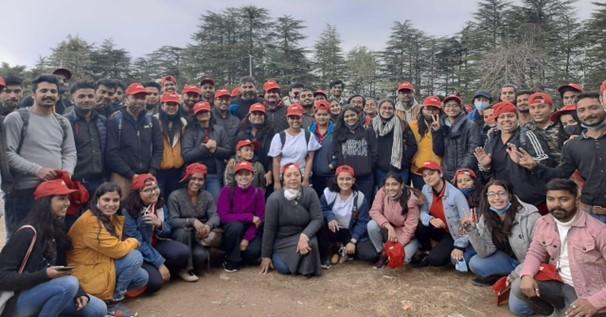
Environmental Sustainability: Plantation Drives and Swachh Bharat Mission Shoolini University's commitment to environmental conservation is manifested in its regular plantation drives and cleanup campaigns. Collaborating with the Forest Department, Healing Himalayas and the university's unit, over 15,000 saplings have been planted and nurtured, enhancing the local ecosystem. Furthermore, clean-up drives focusing on local water bodies in neighboring villages have encouraged students to actively participate in environmental stewardship and community well-being.
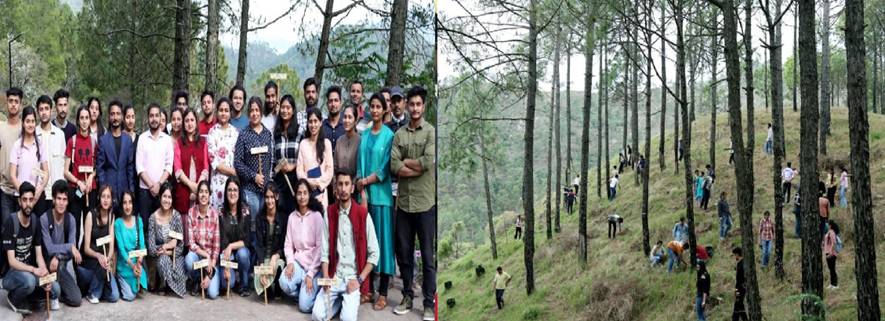
Tree plantation drive
4. Sensitization through University-wide Programs: https://shooliniuniversity.com/sprint-workshop
- The innovative SPRINT program offers credit-based education covering various SDG-related topics, enhancing students' awareness of global sustainability challenges.
- Through SPRINT's comprehensive curriculum, students develop a deeper understanding of SDGs and their role in achieving global sustainability targets, empowering them to make meaningful contributions to sustainable development initiatives.
2022
| SDG 17: Annual Status Report 2022 | View |
Education for SDGs commitment to meaningful education
Shoolini University recognizes its commitments towards quality education and is deeply committed to providing meaningful education that aligns with various SDGs. To achieve this objective, the university has implemented a choice-based credit system and mandatory open electives for undergraduate students. The primary objective of these initiatives is to foster a deep understanding of sustainability issues among the students and equip them with the knowledge and skills necessary to contribute to a more sustainable future. Additionally, Shoolini University goes beyond the traditional classroom setting by organising several workshops, and extracurricular activities focused specifically on sustainability and the SDGs. These activities provide students with practical experiences and hands-on learning opportunities.
The initiatives undertaken by Shoolini University to fulfil its commitment to Education for the SDGs are outlined below:
I Integration of SDGs into the Curriculum:
Link: List of Open Elective Courses Addressing SDGs.xlsx
- Shoolini University has implemented a choice-based credit system and mandatory open electives for all undergraduate students, allowing them to choose courses that align with the SDGs and promote sustainable development.
- The university has designed open elective courses specifically focused on one or more SDGs, ensuring that students receive education that directly addresses the global sustainability agenda.
Research Focus on Sustainable Development:
Link: Shoolini Research Policy.pdf
- Shoolini University incorporates a strong research component across its programs, including undergraduate, postgraduate, and doctoral levels, to address sustainable development challenges through rigorous research.
- The university's research policy places a significant emphasis on sustainable development in the Himalayan Region, encouraging researchers to focus on finding sustainable solutions specific to this region.
- Researchers at Shoolini University undertake research projects that align with the SDGs, ensuring that their work contributes to the broader goals of sustainable development.
Sensitization through University -wide Programs
Link Social project Report 2022-23.docx
- Shoolini University actively encourages students to engage in SDG-related activities and initiatives, providing them with opportunities to make a positive impact on sustainable development.
- The university motivates students to become future leaders in the field of sustainable development by nurturing their leadership skills and fostering a sense of responsibility towards sustainable practices.
- Social projects integrated into the curriculum of the Faculty of Management Sciences and Liberal Arts allow students to work on real-world social problems related to the SDGs, fostering practical application of their knowledge and skills.
Student Engagement and Leadership Development (Social projects):
Link https://shooliniuniversity.com/sprint-workshop
- Shoolini University has implemented the SPRINT program, which offers credit-based education on various issues, including the SDGs, sensitizing students to global challenges and promoting a deeper understanding of sustainability.
- Through the SPRINT program, the university aims to enhance students' understanding of the SDGs and their role in achieving sustainable development, empowering them to contribute meaningfully to the global sustainability agenda.
2021
The role of universities is vital to achieving the SDGs because of their focus and impact. Shoolini University is committed to meaningful education around various SDGs and is actively engaged in education, research, and community participation, which are all crucial to the transformation of individuals and society toward a more sustainable future. The University collaborates with local and global organizations on sustainability initiatives to raise awareness of the SDGs. By engaging directly with social entrepreneurs, employers, and industry, Shoolini University aims to provide practical solutions for sustainable development. Shoolini University aspires to be a role model for other universities in the adoption of sustainable development pedagogies and curricula. We are amongst the first few universities in India to implement a choice-based credit system and have made open electives mandatory for all the UG students across the university (list of open-electives attached). These open elective courses are generic in nature and are basically designed around one or more of the SDGs. In addition, many programmes being offered at Shoolini University (UG, PG, and Doctoral) have a very strong research component in them, and the research policy of the university also focuses on the sustainable development of the Himalayan Region (Research Policy Attached). When assigning research projects to students, we emphasise that the research problem must be in line with our research policy in order to work on the sustainable development of the Himalayan Region. Shoolini University encourages its students to engage in a variety of SDG-related activities and motivates its students to become future leaders in the quest to achieve sustainable development goals (Social Projects Report Attached). In order to sensitise the students, Shoolini university have included social projects as part of curriculum of Faculty of Management Sciences and Liberal Arts. As part of social projects, the social problems pertaining to SDGs are assigned to the students. In addition, we also have a university wide credit programme called SPRINT where we sensitise students on various issues including SDGs (SRRINT booklet attached). "Parivartan" is an educational initiative run by the students of Shoolini University through which our students teach the children of daily wage employees.
2021
| Social Projects Initiative and its Activities Jan to Jul 2021 | View |
| Social Projects Initiative and its Activities Aug to Dec 2021 | View |
| SPRINT Training Programme Booklet | View |
| Research Policy | View |
2020
| Research Policy | View |
| Social Projects Initiative and its Activities | View |
| SPRINT Training Programme Booklet | View |