

Business decisions today are shaped less by gut feeling and more by data-backed insights. From how e-commerce platforms forecast demand to how banks flag suspicious transactions or how streaming platforms decide what content to promote, analytics and artificial intelligence are now deeply embedded in everyday business operations. This growing reliance on data has brought Business Analytics and AI to the centre of modern management.
What is changing is not just the technology, but the role of managers themselves. AI systems can analyse patterns, predict outcomes, and recommend actions, but they do not decide business priorities on their own. Leaders are still responsible for asking the right questions, interpreting insights, weighing risks, and ensuring ethical use of data. This shift has blurred the line between management and technology, making analytical thinking a core leadership skill rather than a specialist function.
As organisations across industries adopt analytics-led decision-making, management education has evolved to reflect this reality. So let’s find out the future of this Business Analytics and AI degree.
Why Businesses Are Moving Beyond Intuition-Led Decisions
Experience still matters in business, but it is no longer enough on its own. Markets are volatile, customer behaviour is unpredictable, and competition is global. Decisions based purely on past trends often fail to capture real-time changes.
Amazon has openly shared through its official engineering and operations blogs how predictive analytics helps it forecast demand across regions and optimise last-mile delivery. These systems process millions of data points, but managers decide how forecasts translate into inventory investment, warehouse expansion, and delivery commitments.
This shift explains why analytics literacy is now a managerial requirement rather than a technical speciality.
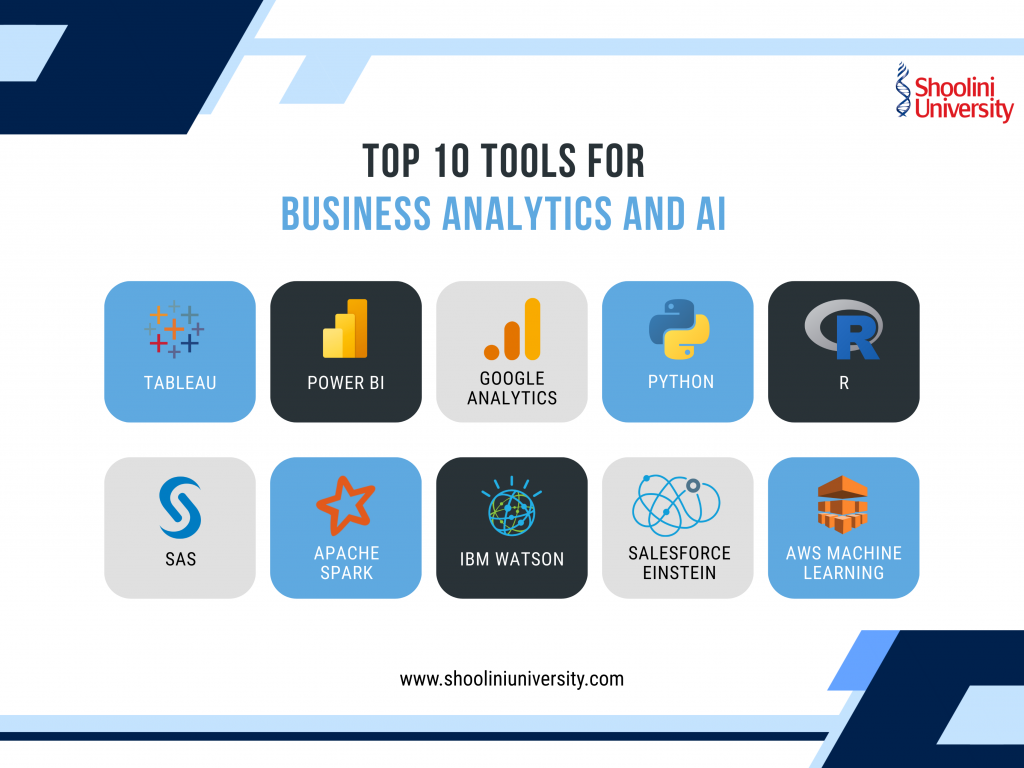
Business Analytics and AI in Real Business Operations
Business analytics helps organisations understand what has happened and why. Artificial intelligence extends this by predicting what is likely to happen next and recommending actions.
Netflix offers a strong example. According to the Netflix Technology Blog, its recommendation systems analyse viewing history, session behaviour, and content attributes to personalise what users see. However, these models do not operate in isolation. Business teams decide how recommendations align with content strategy, regional preferences, and long-term subscriber growth.
The expanding Business Analytics and AI scope is also visible in Indian companies. Flipkart has discussed in interviews and tech forums how it uses AI to optimise product search, personalise customer journeys, and manage large-scale sales events. These systems influence pricing, seller visibility, and inventory decisions—areas where managerial judgement is essential.
How AI is Redefining the Manager’s Role
AI has changed how decisions are supported, not who makes them. A clear illustration comes from Uber’s dynamic pricing system. Academic studies and investigative reports have analysed how Uber’s algorithms adjust fares based on demand and supply. While AI suggests prices in real time, management teams are responsible for ensuring regulatory compliance, addressing ethical concerns, and maintaining trust among riders and drivers.
This highlights an important point: managers must understand how AI works, where it can go wrong, and how to govern its use responsibly. Modern management education reflects this reality by focusing on interpretation, oversight, and ethical application of analytics-driven systems.
Analytics-Driven Decision-Making in Traditional Industries
AI is not limited to digital platforms. Tata Steel has publicly documented how it uses sensor data and predictive analytics to monitor equipment health and prevent unplanned downtime. These insights help plant managers schedule maintenance more efficiently and reduce operational risk.
In healthcare, Apollo Hospitals has adopted AI-based risk assessment tools, particularly in cardiovascular care and telemedicine services. Reports and interviews with Apollo’s leadership show that while AI supports diagnosis and monitoring, healthcare managers decide how these tools fit into clinical workflows and patient care standards.
These examples show that analytics-driven management is relevant across sectors, not just technology companies.
Academic Preparation for Analytics-Led Leadership
An MBA Business Analytics and AI reflects these real-world changes. Instead of teaching analytics as a separate technical subject, such programs integrate it into finance, marketing, operations, and strategy. Students learn how data informs decisions, how AI tools are evaluated, and how insights are translated into business actions.
This approach prepares graduates to work alongside data scientists, technology teams, and automated systems without losing sight of organisational goals.
India’s Growing Demand for Analytics-Savvy Managers
India’s business ecosystem is rapidly adopting analytics and AI. IT majors like Infosys regularly announce AI-led enterprise transformation projects, while banks and telecom companies deploy AI for fraud detection and risk monitoring. Industry reports and news coverage highlight how these initiatives require managers who can connect analytics outputs with business strategy.
As a result, MBA Business Analytics careers in India are expanding across consulting, financial services, healthcare, manufacturing, and digital platforms.
Why AI-integrated Management Education is Future-Ready
A management degree with AI equips students to operate in environments where automation and human judgement coexist. As AI tools evolve, managers who understand their strengths and limitations will be better positioned to lead teams, design policies, and make responsible decisions.
Rather than reacting to change, they are trained to guide it.
Institutional Approach to Analytics-Led Learning
Choosing the best university for Business Analytics and AI requires evaluating how closely academic learning aligns with real business practice. Located in the Kasauli Hills, Shoolini Business School at Shoolini University offers the best management education in business analytics and AI.

The university is ranked as India’s No.1 private university by QS World University Rankings and holds an A+ NAAC accreditation. Its MBA programs are UGC-approved and NBA-accredited, ensuring that academic standards remain aligned with national and global benchmarks. The residential structure of the MBA program is designed to support focused learning. A mandatory hostel stay in the first year creates an immersive academic environment, while the second year offers greater flexibility as students engage in internships, projects, and industry exposure.
What sets the Shoolini MBA experience apart is its emphasis on real-world readiness rather than theory-heavy instruction. The curriculum is supported by academic and industry collaborations with organisations such as the London Institute of Banking and Finance (LIBF), the National Institute of Securities Markets (NISM), Satori Paths, and TÜV SÜD. As a member of AACSB, the business school aligns its teaching practices with globally recognised standards in management education.
Professional development is treated as a continuous process rather than a one-time intervention. Students participate in structured initiatives such as the SPRINT Bootcamp, inspired by Stanford-style learning and focused on problem-solving and execution. This is complemented by the Advanced Training Program (ATP), which emphasises industry-relevant skill building. Personalised mentorship supports leadership development, while programs like V-Empower at the Magdalena Mook Centre for Leadership Coaching focus on self-awareness, communication, and managerial effectiveness.
Industry exposure forms a key part of the learning ecosystem. Through its association with the National Human Resource Development Network (NHRDN), students interact with senior HR leaders from across the country. These engagements support internships, live projects, and early professional networking, helping students understand how analytics-driven decisions are made within organisations.
The university also follows a clearly defined outcome-oriented approach through its ‘Mission 130’ initiative, which focuses on comprehensive placement support for MBA students. Paid internships during the program ensure that graduates leave with hands-on industry experience, not just classroom knowledge.
Conclusion
Across industries and geographies, businesses are already using analytics and artificial intelligence to shape outcomes. Business Analytics and AI are present-day management tools. For students preparing for leadership roles, understanding this intersection is essential to making informed, ethical, and effective decisions in a data-driven world. Shoolini University is here to help you understand this better. Admissions for MBA in Business Analytics and AI are now open at Shoolini.
FAQs:
Q1. Who should pursue an MBA in Business Analytics with AI?
This MBA is meant for graduates who want to work in business roles where decisions are data-driven. It is perfect for students interested in analytics-led roles in consulting, finance, marketing, operations, and general management.
Q2. Is an MBA in Business Analytics & AI suitable for non-technical students?
Yes. The program does not require a technical background. It is designed for management students who need to understand analytics outputs and use them in business decisions.
Q3. How is an MBA in Business Analytics & AI different from a regular MBA?
In this MBA, analytics and AI are integrated into core subjects such as marketing, finance, operations, and strategy. A regular MBA relies more on case discussion and experience-based decision-making.
Q4. Why choose Shoolini University for an MBA in Business Analytics & AI?
Shoolini University combines analytics-focused coursework with industry exposure, internships, and structured skill development. The residential MBA format supports focused learning and consistent peer interaction.
Q5. Does the MBA in Business Analytics & AI prepare students for leadership roles?
Yes. The program trains students to read data, question outputs, and make informed decisions. These skills have become a part of how managers work today, across roles and sectors.
Q6. Can students pursue research or advanced studies after completing this MBA?
Yes. Graduates can pursue doctoral studies, specialised certifications, or research-oriented roles related to management and analytics.
Sources: