

Computer Science is one of the fastest-changing fields today. Tools, platforms, and technologies that were important five years ago are already being replaced or upgraded. Because of this, many students worry about whether the jobs they are preparing for will still exist in the future.
Research and industry reports clearly show that technology is reshaping work. Books like The Second Machine Age explain how digital technologies are changing the nature of jobs, not just replacing them. Similarly, reports by the World Economic Forum highlight that automation and intelligent systems will change how tasks are done across industries. What this means for CSE Students is simple: future jobs will not always look the same.
At the same time, this shift creates opportunity. Students who understand core computer science concepts, have future-ready skills, stay updated with tools, and gain hands-on experience will be well placed for new roles. Instead of preparing only for fixed CSE jobs, students should prepare for change itself. This blog looks at the kind of jobs that may shape the future, the tools and technologies behind them, and what students can start doing now to stay ahead.
Technology Is Creating New Kinds of Roles
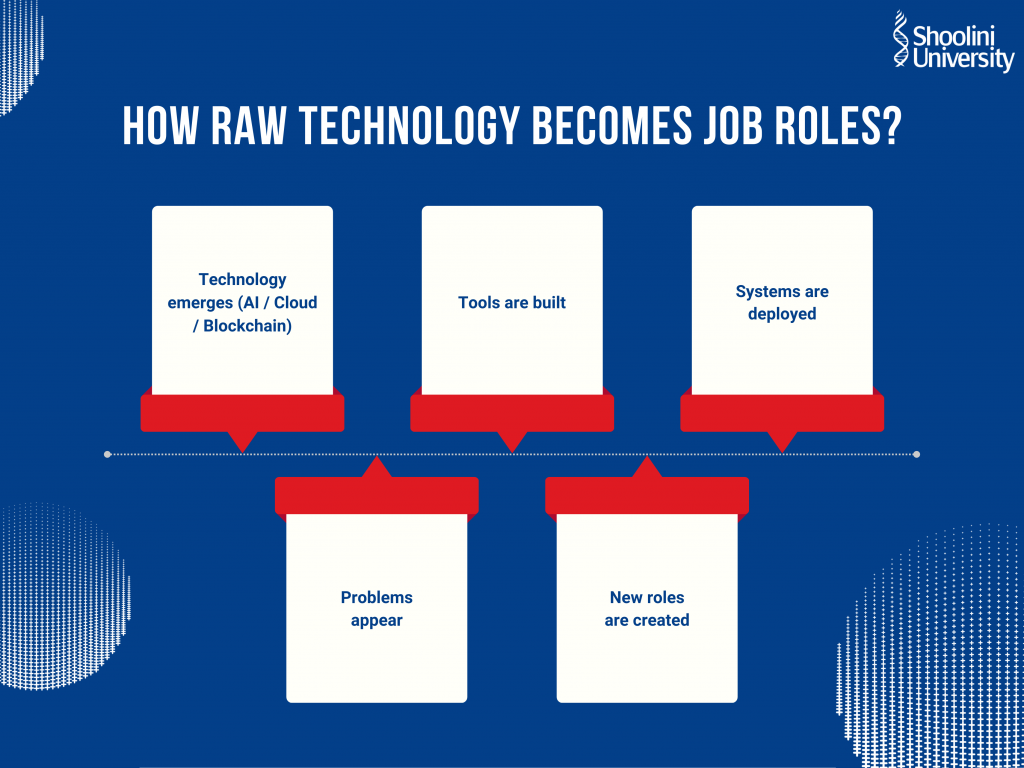
In the past, most computer science graduates aimed for roles like software developer or system engineer. Today, work is more specialised and more connected. Cloud platforms, artificial intelligence, data systems, and automation tools are changing how software is built and used.
Because of this, many roles are emerging that do not yet have fixed definitions. For example, companies already talk about AI operations engineers who manage and monitor AI systems in production. These are a part of AI and automation jobs. Another growing area is machine learning infrastructure specialists, who focus on deploying and scaling models rather than building them from scratch. Roles such as data privacy engineers are also emerging as systems handle more sensitive information.
Books like Human + Machine explain that AI does not simply replace human work; it changes it. Humans now work alongside intelligent systems, which creates new responsibilities and job roles. These next-gen IT roles are built around tools such as cloud services, automation frameworks, data pipelines, and AI platforms rather than just traditional coding.
Tools and Technologies Shaping the Future
To understand future jobs, students need to understand the tools behind them. Technologies like cloud computing platforms, machine learning libraries, DevOps tools, and data processing frameworks are already shaping work.
For example, cloud tools allow systems to scale globally, which is why roles around cloud architecture and automation are growing. Machine learning frameworks are used not only by researchers but also by product teams. Cybersecurity tools are becoming more advanced as systems become more connected.
These trends point clearly towards emerging tech careers that mix multiple skills rather than relying on one narrow expertise.
Jobs That May Define the Future of CSE
Some future roles may not have fixed titles yet, but their work is already visible:
- AI Systems Integrator: focuses on connecting AI tools with real products and services.
- Automation Workflow Designer: builds systems that automate business and technical processes.
- Cloud Security Specialist: works at the intersection of cloud platforms and cybersecurity.
- Data Ethics and Governance Engineer: ensures responsible and fair use of data and algorithms.
These roles show how computer science trends are moving towards applied, real-world problem solving. They are likely to shape career after B Tech CSE in the coming years.
What Students Should Focus On Now
To prepare for future jobs, CSE students need a balanced approach. Strong fundamentals in algorithms, databases, operating systems, and networks remain essential. These basics make it easier to learn new tools as they appear.
At the same time, students should actively work with modern technologies. Learning how to use cloud platforms, version control systems, basic machine learning libraries, and automation tools builds confidence. This does not mean mastering everything, but understanding how systems fit together.
Hands-on projects are especially important. Research and employer surveys consistently show that students with project experience adapt better to changing roles. Building small applications, automating tasks, or working with data helps students understand how theory meets practice.
Learning Beyond the Classroom
Future roles will demand continuous learning. Students should follow developer communities, technical blogs, and research summaries to stay updated. This habit helps them notice new tools and ideas before they become mainstream.
Reading books that explain how technology shapes work also helps. The Second Machine Age and AI Superpowers both explain why technical skills alone are not enough and why adaptability matters. These ideas are reflected in research papers and global job reports as well.
Study at Shoolini University
Shoolini University has built its engineering programs around the changing demands of the technology-driven job market. The university is ranked No. 3 in Engineering by THE World University Rankings by Subject 2026 and No. 7 in Engineering by QS World University Rankings 2025, reflecting its growing global recognition in technical education.
For students planning long-term careers in computer science, Shoolini offers a future-focused B Tech CSE program with specialisations aligned to emerging technologies. These include Artificial Intelligence, Blockchain & IoT, Game Design & AR/VR, Cloud Computing, Cyber Security, DevOps, Data Science, and Graphics and Animation.
The Faculty of Engineering and Technology includes academicians and industry professionals from globally recognised institutions such as Berkeley, UPenn, Columbia University, Stanford, Oxford, IISc, and IITs.
Shoolini also provides advanced learning infrastructure to support hands-on education. Facilities such as the XR and AI Research Centre and the AI and Futures Centre give students access to modern tools and technologies that reflect how systems are designed and deployed in real environments.
Industry integration is a key focus area. Students receive industry-recognised certifications through collaborations with organisations like AWS, IBM, Google Digital Academy, and Bosch. Support from Microsoft and AWS Academy further ensures that students stay aligned with current industry platforms and tools, helping bridge the gap between classroom learning and real-world expectations.
Innovation is encouraged beyond regular coursework. Through the university’s One Student One Patent Policy, students are actively supported in filing patents for original ideas. This innovation culture is strengthened by collaborations with over 250 international universities, enabling global exposure through student and faculty exchange programmes.
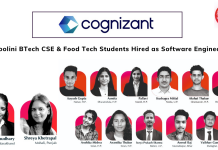
Career readiness is supported through Mission 130, which aims for 100% placements, with 30% of students placed in top firms. Graduates from Shoolini have been recruited by companies such as Ericsson, HCL, Trident, Citrix, Genpact, Cognizant, and IBM, showing the industry relevance of its engineering programs.
Learning at Shoolini goes beyond large lecture halls. Students often work in small teams under close faculty mentorship, solving real-world problems through project-based learning. To further support placement preparation, students also gain access to Siqandar, an AI-powered interview preparation platform that helps them improve technical and interview readiness.
Preparing for What Comes Next
The future of work in computer science will not follow a fixed path. Roles will continue to change as technology evolves. But students who understand tools, follow trends, and build real systems will always find opportunities.
CSE students Preparing for jobs that don’t exist should stay curious, learn continuously, and start applying knowledge to real problems. With the right mindset and preparation, students can move confidently into new roles — even before those roles are fully defined. The right education is equally important and Shoolini University is here to provide you that. So what are you waiting for? Join Shoolini Now, The best university for Engineering in India!
Sources:
https://www.weforum.org/publications/the-future-of-jobs-report-2025/