
Healthcare in India is no longer limited to doctors and hospitals. Today, technology plays an equally important role in saving lives. AI-supported diagnosis, robotic surgeries, and portable diagnostic machines used in rural areas show how medical care is becoming closely linked with engineering innovation.
This shift is one of the biggest reasons why Biomedical Engineering in India is gaining strong momentum.
India faces two realities at once — a large population in need of affordable healthcare and a growing demand for advanced medical technology. To bridge this gap, the country is investing heavily in medical device manufacturing, digital health systems, and research-driven healthcare solutions.
For students exploring meaningful engineering careers and researchers observing emerging technology ecosystems, biomedical engineering represents a field where innovation directly impacts human lives. Understanding how and why this discipline is expanding helps explain why India is witnessing a steady rise in opportunities linked to biomedical innovation.
India’s Healthcare System is Becoming Technology-Driven
Over the past decade, India’s healthcare ecosystem has undergone a structural transformation. Hospitals are increasingly dependent on diagnostic imaging systems, smart monitoring devices, surgical robotics, and data-based treatment planning.
Government initiatives and policy support have accelerated this shift. The National Medical Devices Policy and Production Linked Incentive (PLI) schemes are encouraging domestic innovation and reducing dependence on imported medical equipment. As a result, India is emerging as one of Asia’s largest medical technology markets.
This technological transition has created a new requirement: professionals who understand both engineering systems and human physiology. Biomedical engineers now work alongside doctors to ensure devices function safely, efficiently, and accurately.
This growing integration explains why Biomedical Engineering in India is moving from a niche specialisation to a mainstream engineering discipline.
The Silent Boom of India’s Medical Device Industry
One of the strongest indicators of growth comes from India’s medical devices sector. The industry, valued at around $15 billion recently, is expected to expand significantly by 2030, making it one of the fastest-growing healthcare segments in the country.
New medical device parks and manufacturing hubs are being developed across states. For instance, large-scale facilities are being established to promote indigenous production of advanced healthcare equipment, including technologies related to artificial organs and diagnostic systems. These initiatives are also expected to generate thousands of skilled technical jobs.
The shift towards ‘Make in India’ healthcare manufacturing means biomedical engineers are no longer limited to maintenance roles in hospitals. They are increasingly involved in design, testing, innovation, and product development.
This expansion significantly strengthens the scope of Biomedical Engineering across industries.
What Students Often Don’t Realise About This Field
Many students assume biomedical engineers mainly repair medical equipment. In reality, the field is far broader.
A student pursuing a Biomedical Engineering course after 12th enters an interdisciplinary learning environment combining biology, electronics, artificial intelligence, and materials science. Through programs such as B Tech Biomedical Engineering, learners develop the ability to design solutions rather than operate machines.

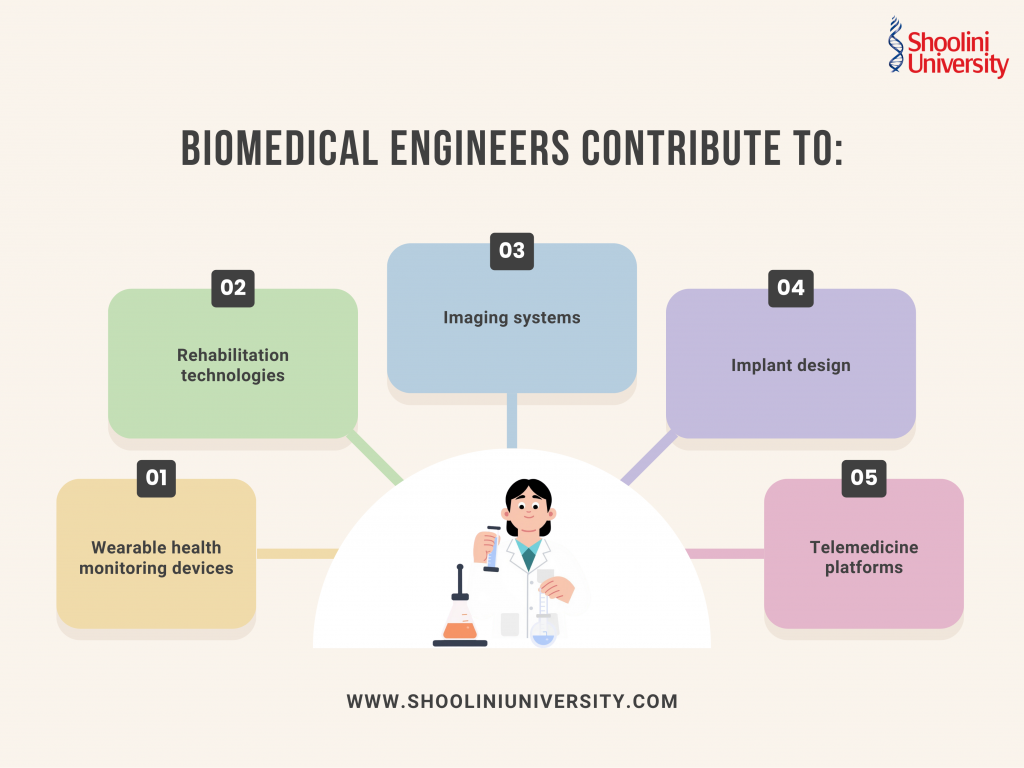
Indian institutes are even launching specialised programs combining AI with healthcare innovation, showing how academic education is evolving alongside industry needs.
Innovation is Reshaping Careers in Healthcare Engineering
India’s innovation ecosystem is playing a major role in shaping a Career in Biomedical Engineering. Research centres such as the Biomedical Engineering and Technology Innovation Centre (BETiC) at IIT Bombay have already developed multiple healthcare devices that have moved from the laboratory to real-world production.
Private companies are also contributing to indigenous innovation. Indian firms have developed robotic surgical systems and advanced heart technologies using AI-supported visualisation and remote surgical capabilities.
These developments highlight a key shift: biomedical engineers are becoming innovators, solving challenges in healthcare accessibility rather than merely supporting medical infrastructure.
As healthcare startups continue to grow, Biomedical Engineering jobs in India are expanding into research labs, startups, manufacturing companies, and health-tech enterprises.
Technology Trends Defining the Future of Healthcare
The Future of Biomedical Engineering is closely connected with emerging technologies transforming global healthcare.
Artificial intelligence is already assisting doctors in disease detection and treatment planning. Studies suggest AI-driven systems can significantly improve diagnostic efficiency and healthcare delivery models in India.
Wearable health technologies and personal health informatics platforms are also gaining importance, allowing continuous monitoring instead of hospital-dependent treatment.
At the national level, rapid AI adoption across sectors is expected to reshape industries and create new technology-focused roles, including healthcare engineering specialisations.
All these trends reinforce the long-term relevance of Biomedical Engineering in India.
Opportunities Come With Real Challenges
Despite strong growth, biomedical engineering remains a demanding field. Medical technologies must meet strict regulatory standards, safety requirements, and clinical validation processes.
However, these challenges make skilled professionals more valuable. Engineers who understand clinical needs, data systems, and product innovation are increasingly sought after.
India’s healthcare expansion into rural and semi-urban regions also requires affordable, locally designed solutions. Biomedical engineers play a critical role in developing low-cost technologies suited to diverse healthcare environments.
This problem-solving dimension makes the field attractive for researchers interested in socially impactful innovation.
Why Study B Tech Biomedical Engineering at Shoolini University?


Ranked as the No.1 Private University in India by the QS World University Rankings, Shoolini University has emerged as a leading destination for research-driven education and innovation-led learning. The university’s School of Bioengineering and Food Technology brings together engineering, life sciences, and healthcare to create solutions that directly address global medical and technological challenges.
The B Tech Biomedical Engineering program at Shoolini University is a four-year undergraduate degree designed to bridge the gap between engineering and modern healthcare systems. With an interdisciplinary curriculum similar to the university’s globally recognised biotechnology programs, students are trained to work at the intersection of medicine, technology, and innovation. The program prepares graduates for impactful careers in medical device development, healthcare R&D centres, diagnostics, and clinical technology sectors.
Students gain extensive practical exposure through 104+ state-of-the-art laboratories, where they work with advanced medical instrumentation, diagnostic systems, and emerging healthcare technologies. Learning goes beyond classrooms, supported by mentorship from postdoctoral faculty trained at globally reputed institutions such as Oxford, IITs, and other leading research centres.
Shoolini’s strong research ecosystem is further strengthened by its One Student One Patent policy, which encourages learners to turn ideas into real-world innovations. Supported by 11 Centres of Excellence, the university integrates academic learning with industry exposure and global collaboration opportunities through exchange programs in countries such as the USA and the UK.
What truly sets Shoolini apart is that students become part of an active and impactful research environment from the early stages of their academic journey. University researchers are already contributing to healthcare innovation with global relevance.
For instance, a research study led by Assistant Professor Ravi Kant from the Faculty of Applied Sciences and Biotechnology developed an artificial intelligence–based predictive model to assess cardiovascular disease risk among elderly rural women in North and Eastern India.
In another breakthrough, Shoolini researchers have developed a patented telemedicine device to transform healthcare accessibility, particularly in remote regions. This portable system allows users to monitor vital health parameters, such as blood pressure, blood sugar levels, and mental well-being, via smartphone and wearable integration. Using real-time data analysis powered by FP-Growth algorithms and association rules, the device can detect early symptoms of diseases such as diabetes, provide personalised health recommendations, and alert healthcare professionals when required.
Such innovations demonstrate how Shoolini students and researchers are actively shaping the future of healthcare technology, ensuring Biomedical Engineering graduates are not just job-ready but innovation-ready.
Conclusion
Biomedical engineering is steadily redefining how healthcare systems function in India. For students, the field offers the opportunity to work at the intersection of technology and human well-being. For researchers, it presents a space where engineering solutions directly address national healthcare challenges. As India moves toward self-reliance in medical technology and the expansion of digital healthcare, biomedical engineering is poised to remain one of the most impactful engineering domains in the coming years. If you also want to be a part of this exciting field, don’t wait. Join Shoolini University now.
Sources & References:
- India Brand Equity Foundation – Medical Devices Industry Report
https://www.ibef.org/industry/medical-devices - Economic Times (Feb 2026) – India’s Medical Devices Industry Growth Report
https://economictimes.indiatimes.com/industry/healthcare/biotech/healthcare/indias-medical-devices-industry-to-reach-usd-50-1-billion-by-2030-report/articleshow/128199885.cms