

Yes, IoT careers are growing rapidly in 2026 as connected technologies become the backbone of industries, smart cities, and everyday systems. The global IoT market has already crossed $1 trillion and is expected to grow further in the coming years.
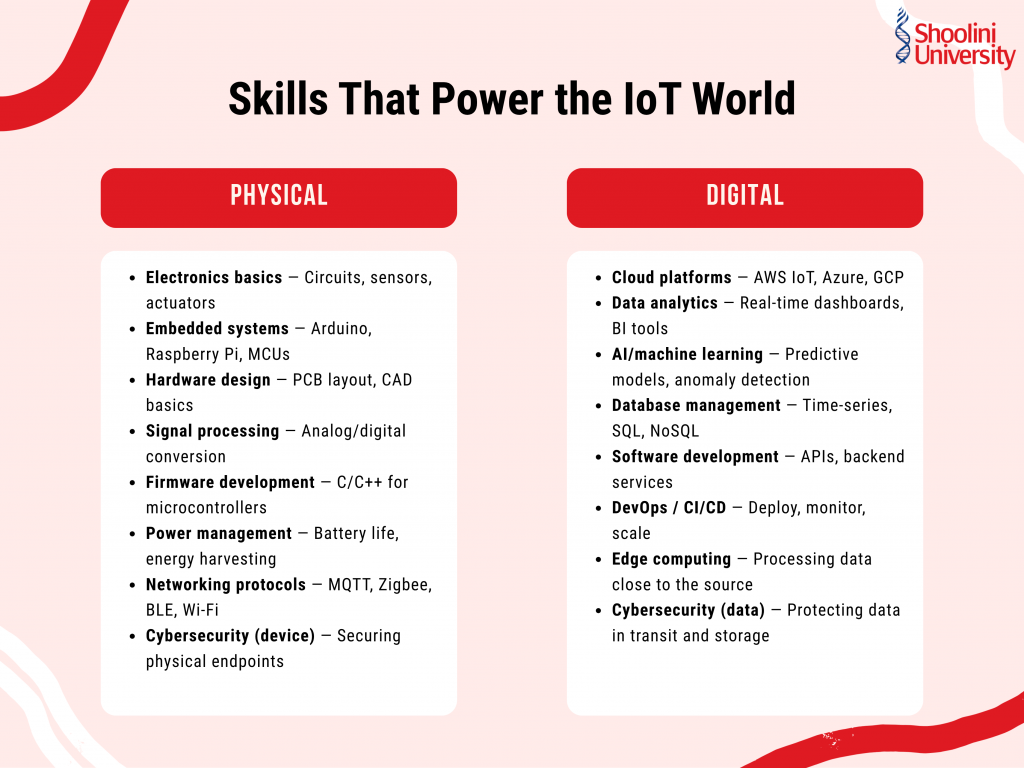
But building a career in IoT is not just about coding. It involves working with devices, data, and intelligent systems that can monitor, predict, and even act on their own.
In this blog, you’ll understand what IoT careers involve, the skills required, career opportunities, and how to get started in this field.
What Are IoT Careers and Why Do They Matter Today?
IoT careers focus on building systems where physical devices — machines, sensors, appliances — communicate with digital platforms.
But today, IoT is no longer about smart gadgets. It has become core infrastructure.
The global IoT market has crossed $1,055 billion in 2026 and is projected to grow beyond $5.5 trillion by 2034. Large enterprises control nearly 64% of this market, meaning most career opportunities lie in large-scale digital transformation projects.
At the same time, governments are no longer just regulating IoT — they are investing heavily in it.
- Smart city infrastructure spending is expected to reach $312 billion in 2026.
- Nearly 45% of city tech budgets now go directly into IoT devices like sensors and smart meters.
What Role Do IoT Professionals Play?
IoT professionals build the bridge between the physical and digital worlds.
Key Responsibilities
- Designing connected systems
- Managing device communication
- Processing real-time data
- Ensuring cybersecurity and compliance
- Integrating IoT with AI and cloud
In 2026, their role has evolved from “monitoring systems” to building intelligent, self-operating systems.
Why Are IoT Careers Growing Rapidly?
The growth of IoT is driven by a combination of technology evolution, real-world demand, and government investment.
Industry Growth Snapshot
| Indicator | Data | What It Means |
| Global IoT Market (2026) | $1,055 billion | Industry at trillion-dollar scale |
| Future Projection | $5.5 trillion by 2034 | Massive long-term growth |
| Enterprise Share | 64% | Corporate-led hiring |
| Smart City Spending | $312 billion | Government-driven demand |
Key Growth Drivers
- Industrial IoT (IIoT) market exceeding $300 billion
- Rise of Edge AI — devices making decisions locally
- Expansion of smart cities and public infrastructure
- Government policies like semiconductor missions and cyber regulations
- Demand for real-time, data-driven systems
One major shift in 2026 is the move toward ‘Agentic IoT’—systems that don’t just report problems but act on them automatically.
How IoT Careers Are Transforming Real Life (The ‘Bridge’ in Action)
IoT is already part of everyday life — you just don’t always notice it.
- Retail (Smart Labels)
Stores like Walmart and Tesco use digital shelf labels that automatically adjust prices to reduce waste.
- Smart Homes & Insurance
IoT leak detectors can detect small leaks and shut off water, preventing major damage.
- Electric Vehicles (EVs)
Cars now communicate with power grids —charging when electricity is cheapest or even supplying power back.
- Wearables & Health
Devices now track stress and glucose levels, offering early health warnings.
- Smart Appliances
Machines predict failures before they happen and even schedule maintenance.
This is what IoT Careers actually build—systems that impact daily life.
How Do IoT Professionals Drive Industry Innovation?
- Edge AI & Physical AI: Devices now include Neural Processing Units (NPUs), allowing them to make decisions without relying on the cloud.
- ‘Agentic IoT’ Systems: Machines can now act autonomously — adjusting workflows or scheduling maintenance.
- Infrastructure Visibility: Companies are connecting old machines (“dark assets”) to digital systems to feed AI models.
- Security-by-Design: With global regulations in place, security is now mandatory.
- New laws require vulnerabilities to be reported within 24 hours
- Legacy IoT systems without security compliance are being phased out
This is why the IoT + Cybersecurity + Blockchain skill combination is highly valuable in 2026.
What Career Opportunities Are Available in IoT?
IoT is creating new-age roles that didn’t exist a few years ago.
Top IoT Job Roles (2026)
| Role | Why It’s in Demand |
| Edge AI Developer | Builds intelligent devices without cloud dependency |
| IoT Security Architect | Ensures compliance with global cyber laws |
| Digital Twin Specialist | Creates virtual models of real-world systems |
| V2X Engineer | Enables communication between vehicles and infrastructure |
| IoT Solutions Architect | Designs end-to-end connected systems |
These IoT job roles and responsibilities are shaping modern engineering careers.

How to Start a Career in IoT
Here’s a practical IoT career path for students:
- Start with IoT courses after 12th (engineering stream)
- Pursue B Tech in Computer Science with IoT specialisation
- Work on real-world projects and internships
- Learn AI, cloud, and cybersecurity
- Build practical applications
Programs like B Tech CSE Blockchain & IoT align directly with current industry demand.
What Is the Scope of IoT in India?
The scope of IoT in India is expanding due to both industry demand and government push.
- India’s Semiconductor Mission 2.0 has allocated around ₹8,000 crore ($1 billion) for 2026.
- Focus areas include smart cities, manufacturing, and local chip production.
Global Government Focus (2026)
- USA: Cybersecurity and critical infrastructure
- EU: Semiconductor sovereignty (€100B investments)
- India: Smart cities and local manufacturing
This makes IoT careers a government-backed, stable career path for the next decade.
How Shoolini University IoT Course Prepares You


Building a successful career in IoT demands exposure to real-world technologies, interdisciplinary skills, and hands-on learning. If you are also looking for the best university for IoT in India, Shoolini University is worth exploring.
The university has designed its engineering programs around the evolving demands of the technology-driven job market, especially in areas like IoT, AI, and connected systems. It is ranked No. 3 in Engineering by Times Higher Education (THE) World University Rankings by Subject 2026 and No. 7 in Engineering by QS World University Rankings 2025. This is one of the reasons why you should choose Engineering at Shoolini University.
Future-Focused Programs for IoT Careers
For students planning a career in IoT, Shoolini offers a forward-looking B Tech CSE program with specialisations in emerging technologies, including Artificial Intelligence, Blockchain & IoT, Cloud Computing, Cyber Security, Data Science, DevOps, Game Design & AR/VR, and Graphics and Animation.
Programs like B Tech CSE Blockchain & IoT are especially relevant, combining core computer science with real-world applications of connected systems.
Learning Environment That Matches Industry Needs
The Faculty of Engineering and Technology includes academicians and industry experts from institutions such as Berkeley, UPenn, Columbia, Stanford, Oxford, IISc, and IITs.
Students gain hands-on exposure through facilities like the XR and AI Research Centre and the AI and Futures Centre, where they work on real-world systems and technologies.
Strong Industry Integration
Students benefit from collaborations with organisations like AWS, IBM, Google Digital Academy, Bosch, Microsoft, and AWS Academy—ensuring alignment with real industry platforms and tools.
Innovation and Global Exposure
- One Student One Patent Policy encourages innovation.
- 250+ international collaborations provide global exposure.
Is IoT a Good Career Choice?
Yes — IoT is one of the most future-ready careers today.
Why It’s a Strong Career Option
- Massive industry growth (trillion-dollar market).
- Government-backed investments.
- High demand for skilled professionals.
- Integration with AI, cybersecurity, and hardware.
IoT careers are now central to how industries and cities function.
Final Thoughts
IoT is becoming a big part of how the world works today. From smart homes to industries and cities, everything is getting connected. Because of this, IoT careers are growing fast and will continue to grow in the coming years.
For students, this is a great time to enter the field. But your starting point matters. You need the right skills, practical exposure, and guidance to build a strong career.
Shoolini University focuses on exactly this — combining technology, hands-on learning, and industry exposure. If you’re planning to build a career in IoT, starting your journey at Shoolini in 2026 can be a smart step forward.
Sources:


