


M Tech Bioinformatics sits at one of the most exciting intersections in science today — where biology meets data, and where your work can directly influence how diseases are diagnosed, how drugs are discovered, and how personalised medicine is built.
The field is growing fast, and so is the demand for people who actually understand it.
This blog covers the full picture — career scope, bioinformatics salary in India, top job roles across genomics, pharma, and AI healthcare, and what makes this degree one of the most future-ready postgraduate options in life sciences right now.
What Is M Tech Bioinformatics — And Who Is It For?
It’s a postgraduate engineering program for those who want to work at the crossroads of biology, data science, and technology.
Bioinformatics is now a large part of the life sciences and healthcare sector — the job of a bioinformatician is to translate biological information into usable data using computational tools and methods.
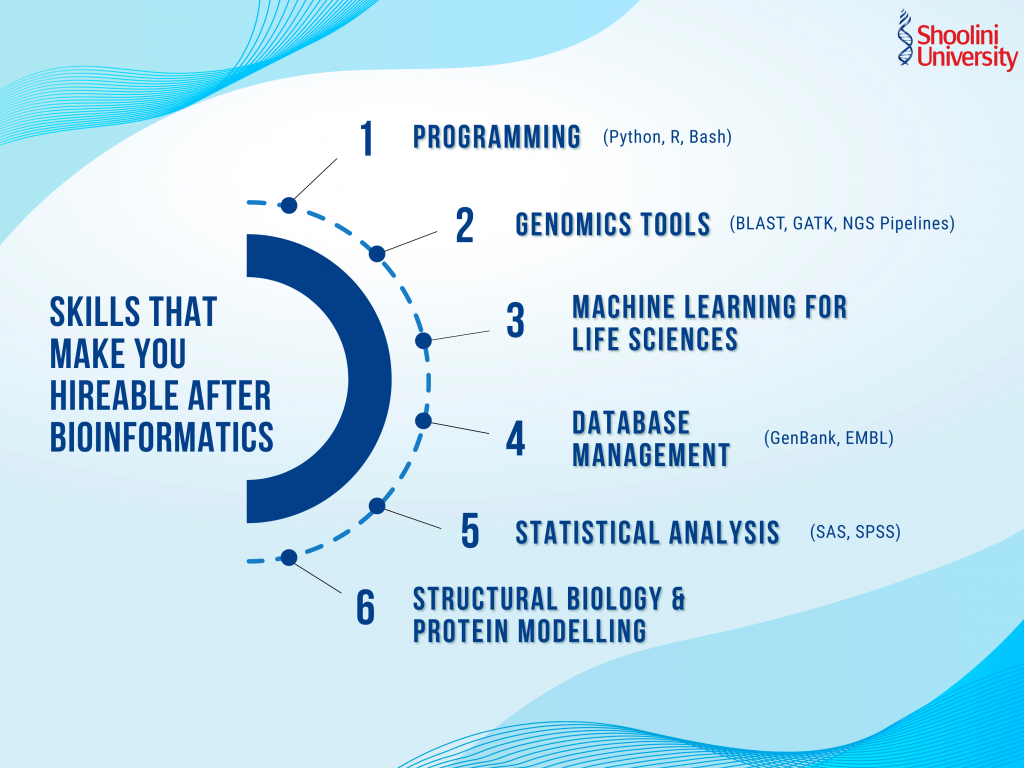
The M Tech program typically covers Genomics and Proteomics, Computational Biology, Database Management, Machine Learning in Life Sciences, Drug Discovery Algorithms, Next-Generation Sequencing (NGS) Data Analysis, and Structural Bioinformatics.
It’s the right degree if you have a background in biotechnology, life sciences, or computer science and want to move into research, pharma, or AI-driven healthcare — rather than staying in a traditional lab-only role.
Bioinformatics Career Opportunities India — What the Numbers Say
The numbers make a strong case.
In 2023, the bioinformatics market in India was valued at USD 337.2 million. It is anticipated to grow at a CAGR of 19.60% from 2024 to 2032, reaching USD 1,822.5 million.
The demand for genomic analysts is projected to grow by 15% annually, and funding for bioinformatics research has doubled globally in the last five years.
India’s biotech sector contributes 4.25% to the national GDP. By 2030, it is projected to reach a USD 300 billion valuation, with over 11,000 biotech startups already active — and the industry is hungry for people who can speak both the language of biological cells and the language of data.
This is what makes bioinformatics research opportunities in India so compelling right now. The talent gap is real, and the sector is actively building infrastructure to fill it.
Genomics and Bioinformatics Jobs — Top Career Paths
An M Tech Bioinformatics degree opens roles across multiple high-growth sectors. Here are the most in-demand career paths:
In Pharma & Biotech: Bioinformatics Scientist, Computational Biologist, Genomics Analyst, Drug Discovery Researcher. Top employers include Biocon, Dr Reddy’s, Sun Pharma, Syngene, Roche, GVK Biosciences, and Jubilant Biosys.
In Healthcare & Diagnostics: Clinical Bioinformatician, Genomic Data Scientist, Variant Curator, Pipeline Developer. Companies like MedGenome, Mapmygenome, and Aster Labs are actively hiring in this space.
In Research & Government: Research Fellow, Project Scientist, PhD Researcher. Key institutions include CSIR-IGIB, ICMR genomics and virology labs, agricultural genomics centres under DBT and DST, and academic institutions with strong computational biology departments.
In AI & Tech: Data Scientist (Life Sciences), ML Engineer for Healthcare, Bioinformatics Software Developer. AI-driven drug discovery startups and health tech companies are emerging as some of the fastest-growing employers in this space.
In Agriculture & Environment: Plant Genomics Analyst, Breeding Informatics Specialist. ICAR institutes and agri-genomics firms are building out these teams steadily.
Bioinformatics Salary India — What Can You Realistically Earn?
| Experience Level | Role | Salary Range |
| Fresher (0–3 yrs) | Bioinformatics Analyst / Research Associate | ₹4 – ₹6 LPA |
| Mid-Level (3–7 yrs) | Bioinformatics Scientist / Genomic Data Scientist | ₹8 – ₹15 LPA |
| Senior (8+ yrs) | Principal Scientist / Research Lead | ₹20 LPA+ |
| PhD / Specialist | Computational Biology / Drug Discovery | ₹20 – ₹25 LPA+ |
A fresh graduate can expect a starting salary of ₹4–6 LPA, which can quickly grow to ₹12–14 LPA with a few years of experience. Genomics Data Scientists — a top-tier role — start at ₹9–10 LPA and can reach over ₹25 LPA for experienced professionals.
For government roles, entry-level positions typically fall under Pay Level-7 with a starting basic pay of approximately ₹44,700 per month, with higher positions such as Scientists and Senior Researchers potentially reaching Level-10 and above.
Specialisation matters significantly. Professionals with expertise in machine learning for bioinformatics, NGS data analysis, or computational drug discovery consistently command higher packages than generalists.

Future of Bioinformatics Careers — Where Is This Field Headed?
The future of bioinformatics careers is being shaped by three converging forces: AI, personalised medicine, and genomics at scale.
The government’s BioE3 Policy has opened the floodgates — the industry is moving toward AI-driven drug discovery, bio-foundries, and sustainable biomanufacturing.
Personalised medicine is tailoring treatments based on a patient’s genetic data — and bioinformaticians are the ones making that possible. Every genomic test, every drug candidate screened computationally, every clinical trial using genomic insights depends on this skill set.
M Tech Bioinformatics graduates also have the opportunity to work internationally with organisations such as the WHO, NIH, and NCBI, as well as with major pharmaceutical companies such as Pfizer and Novartis.
Entrepreneurship is another growing path — graduates are founding companies in precision medicine, bioinformatics software development, and AI-driven diagnostic platforms.
How Shoolini University Prepares You for M Tech Bioinformatics
Shoolini University offers M Tech Bioinformatics through the School of Bioengineering and Food Technology — one of the university’s core research-focused schools.
Shoolini is ranked No. 3 in Engineering in the Times Higher Education World University Subject Rankings, reflecting its genuine strength in technical and applied sciences — not just general rankings.
The program is built for research and industry readiness. Students have access to 11 Centres of Excellence and 104+ state-of-the-art laboratories, including the XR and AI Research Centre and the AI and Futures Centre — spaces designed specifically for work in emerging technologies like AI-driven genomics and computational biology.
A standout feature is Shoolini’s One Student One Patent Policy, which actively encourages students to develop their research into real intellectual property — particularly valuable in a field where novel algorithms and tools are constantly needed.
Faculty at Shoolini bring experience from NCI, NIH, Berkeley, UPenn, Stanford, Oxford, IISc, IITs, and IIMs — giving students access to mentorship that bridges academic rigour with real-world research practice.
For global exposure, Shoolini offers 250+ international exchange opportunities, helping bioinformatics students connect with universities and research groups worldwide.
Industry and research collaborations with Ikigai Lab, Punjab Engineering College, and IIT Kanpur provide additional training and innovation pathways. The university also supports students through merit-based scholarships, making this level of research education more accessible.
For the best university for bioinformatics in India, Shoolini’s combination of research infrastructure, faculty expertise, and industry connect makes it a strong choice for postgraduate students serious about this field.
Is M Tech Bioinformatics the Right Choice in 2026?
Yes — especially if you want a career that combines scientific depth with real-world data impact.
The bioinformatics market in India is growing at nearly 20% CAGR. Pharma, healthcare, government research, and AI startups are all hiring. Salaries start competitive and grow significantly with specialisation and experience.
Most importantly, this is a field where your work has direct consequences — in drug development, disease research, and how medicine is practised. That combination of purpose and career growth is rare.
If you’re a life sciences or CS graduate looking at postgraduate options, M Tech Bioinformatics offers one of the clearest paths into the future of healthcare and biological research in India.
Sources:
- Biotecnika — Bioinformatics Salary Guide: https://www.biotecnika.org/2025/03/bioinformatics-salary-guide-2025-what-to-expect/
- CareerPlanB — Bioinformatics Careers India: https://careerplanb.co/bioinformatics-careers-in-india-top-10-high-salary-jobs/
FAQs
Q1. Can non-biology students apply for M Tech Bioinformatics?
Yes — students from computer science, mathematics, or statistics backgrounds can apply, provided they meet the eligibility criteria set by the university.
Q2. Is coding required for a career in bioinformatics?
Yes — proficiency in Python and R is essential, as most bioinformatics roles involve writing scripts, building pipelines, and analysing large biological datasets computationally.
Q3. Is bioinformatics a good career abroad?
Absolutely — countries like the US, UK, Germany, and Canada have strong demand for bioinformatics professionals, with opportunities at global institutions like NIH, WHO, and companies like Pfizer and Novartis.
Q4. What research areas are trending in bioinformatics today?
AI-driven drug discovery, single-cell genomics, precision medicine, protein structure prediction, and metagenomics are among the most active and fast-growing research areas in 2026.
Q5. Does Shoolini University provide lab exposure for bioinformatics students?
Yes — students have access to 104+ state-of-the-art laboratories, including the XR and AI Research Centre, supported by collaborations with IIT Kanpur, Punjab Engineering College, and Ikigai Lab.
Q6. Can M Tech Bioinformatics graduates pursue a PhD?
Yes — an M Tech in Bioinformatics is a strong foundation for doctoral research in computational biology, genomics, structural biology, or AI in healthcare, both in India and abroad.


