

Biology as a field has changed dramatically over the last decade. It is no longer limited to understanding plants, animals, or cells in isolation. Today, biology is deeply connected with technology, healthcare, agriculture, climate science, and even data analytics. This shift is one of the main reasons students are choosing Biotechnology over life sciences when planning their higher education.
However, this growing interest in biotechnology does not mean that life sciences have lost their value. In fact, life sciences remain the foundation of biological innovation. The difference lies in focus. Life sciences build a deep theoretical understanding of living systems, while biotech applies that knowledge to create solutions. Many students today are drawn to application-based learning, which explains the rising preference for biotechnology over life sciences. At the same time, both fields continue to offer strong academic and research pathways.
This blog explores why biotechnology is gaining momentum, how it differs from life sciences, and why both disciplines remain important in shaping the future of science.
The Core Difference: Understanding vs Application
Life sciences are a broad and essential field. They include botany, zoology, microbiology, genetics, and biochemistry. The focus is on understanding how living organisms function — from molecular processes to ecosystems. They build strong foundations in scientific thinking and research.
Biotechnology, on the other hand, uses this understanding to develop practical solutions. It combines biology with technology, engineering, and data science to create products and innovations. For example, life sciences may study microorganisms in depth, while biotechnology may use that knowledge to develop vaccines, diagnostics, or industrial enzymes.
This applied approach is one reason students are leaning towards biotechnology over life sciences, especially those who want early exposure to industry and innovation. However, it is important to remember that biotechnology builds on the foundation laid by life sciences.
Why Biotechnology Is Gaining Attention
One major reason for the shift towards biotechnology over life sciences is its visible connection with real-world innovation. During the COVID-19 pandemic, biotechnology played a central role in vaccine development. Advances in mRNA technology, gene sequencing, and rapid diagnostics showed how applied biological research can directly impact global health.
Beyond healthcare, biotechnology contributes to:
- Developing disease-resistant crops
- Creating sustainable biofuels
- Designing biodegradable materials
- Improving food safety
Students who want to work on tangible solutions often find that biotechnology aligns better with their career goals.
Emerging Technologies Shaping Biotechnology
Biotechnology is evolving rapidly, which is increasing student interest.
Precision Gene Editing:
Tools like CRISPR and newer gene-editing platforms allow scientists to modify DNA with high accuracy. These technologies are being explored for genetic disorders, crop improvement, and disease research.
Artificial Intelligence in Biology:
AI is now being used in drug discovery, protein structure prediction, and genomics research. The integration of biology with data science has opened new possibilities that were not available a decade ago.
Personalised Medicine:
Treatments are increasingly being designed according to a person’s genetic profile. This shift towards precision medicine is transforming healthcare research.
Synthetic Biology and Bio-Manufacturing:
Scientists are engineering biological systems to produce sustainable materials, eco-friendly fuels, and innovative therapeutic products.
These evolving areas make biotechnology attractive to students who want to work in cutting-edge fields. This trend helps explain why many are choosing Biotechnology over life sciences in recent years.
The Continued Importance of Life Sciences
While biotechnology focuses on application, life sciences remain deeply important. Many groundbreaking discoveries begin in life sciences laboratories. Research in ecology, molecular biology, genetics, and microbiology continues to shape medicine, agriculture, and environmental science.
Life sciences courses often provide:
- Strong theoretical depth
- Extensive research opportunities
- Academic pathways into teaching and pure research
- Foundational knowledge for advanced specialisations
Students interested in fundamental research, environmental studies, biodiversity, or academic careers may find life sciences equally rewarding.
In reality, biotechnology and life sciences are not competing fields. They are interconnected. Biotechnology depends on discoveries in the life sciences, and the life sciences benefit from tools developed through biotechnology.

Research and Interdisciplinary Growth
Another reason students are drawn towards Biotechnology over life sciences is the interdisciplinary exposure. Biotechnology programs often integrate biology with chemistry, computer science, engineering, and data analytics. This structure builds diverse technical skills.
However, life sciences are also evolving. Many programs now include molecular techniques, computational biology, and advanced laboratory training. The gap between the two fields is narrowing as education becomes more integrated.
Students should choose based on interest:
- If they enjoy understanding biological systems in depth, life sciences can be ideal.
- If they want to apply biological knowledge to solve industrial or medical challenges, biotechnology may be more suitable.
Career Pathways in Both Fields
A career in biotechnology can span pharmaceuticals, healthcare, agriculture, food technology, and environmental research. Biotechnology graduates often work in applied research, product development, diagnostics, and regulatory roles.
At the same time, life sciences graduates pursue careers in research institutes, environmental agencies, academia, clinical laboratories, and advanced scientific studies.
The difference is not about which field has a future — both do. The difference is about orientation: theory-driven exploration or application-driven innovation.
Academic Flexibility and Future Scope
Both fields offer clear academic progression. Students can pursue undergraduate, postgraduate, and doctoral studies in either biotechnology or life sciences. Specialisations continue to expand across genomics, microbiology, bioinformatics, environmental biology, and molecular medicine.
The rising preference for biotechnology over life sciences reflects changing student aspirations, not a decline in life sciences. Applied sciences are gaining visibility, but foundational sciences remain essential.
Life Sciences and Biotechnology at Shoolini University
As India’s first biotechnology university, Shoolini University has built a strong academic ecosystem that supports both biotechnology and life sciences, including zoology, microbiology, and related disciplines.

The university follows a unique approach in which coursework is closely integrated with research. Undergraduate students are not treated as passive learners. They are trained to think like scientists and engineers from the very beginning. Through a re-imagined Summit Research Program (SRP), students get early exposure to laboratory work, live research projects, and innovation-driven learning.
Faculty members come from globally respected institutions such as Oxford, the National Cancer Institute (USA), NIH (USA), IISc, IITs, and IIMs. This strong academic background ensures that students in both biotechnology and life sciences learn from experienced researchers who bring international exposure into the classroom.
Shoolini has established more than 250 international collaborations with leading universities, including the University of Arkansas (USA), University of Minnesota (USA), Lanzhou University (China), Gachon University (South Korea), and the University of Naples (Italy). These partnerships enable research-based exchange programs and global exposure opportunities for students in biotech as well as zoology and other life sciences programs.
The university follows its distinctive One-Student-One-Patent policy, encouraging innovation at both the undergraduate and postgraduate levels. Students are guided to develop original research ideas and to translate them into intellectual property.
Infrastructure plays a major role in scientific learning. With 11 Centres of Excellence and more than 104 advanced laboratories, students across biotechnology and life sciences receive hands-on training in modern research facilities. Government-funded grants such as DST FIST, SERB, and PURSE support research activities, as does a government grant to establish the region’s first E-Yuva Centre.
Undergraduate and postgraduate students can also apply for research fellowships linked to government-funded projects. This allows students in zoology and other life sciences streams to engage deeply in research across ecology, genetics, microbiology, and molecular biology, while biotechnology students work on applied innovations.
Placement partners include Biocon, Citrix, Abbott, Serum Institute of India, SRL Diagnostics, and other leading companies.
Whether a student chooses biotechnology or a life sciences program like zoology, the academic structure ensures strong research training, industry exposure, and interdisciplinary learning. Students are prepared for careers as biotechnologists, microbiologists, researchers, scientists, engineers, and specialists in various biological domains.
At Shoolini, the focus is not on choosing between biotechnology and life sciences — it is about building scientific capability in both.
A Balanced Perspective
The growing conversation around biotechnology and life sciences should not be seen as a competition. Instead, it shows how biological sciences are evolving.
Biotechnology appeals to students who want application-based learning and industry exposure. Life sciences attract those who are curious about the fundamental principles of living systems.
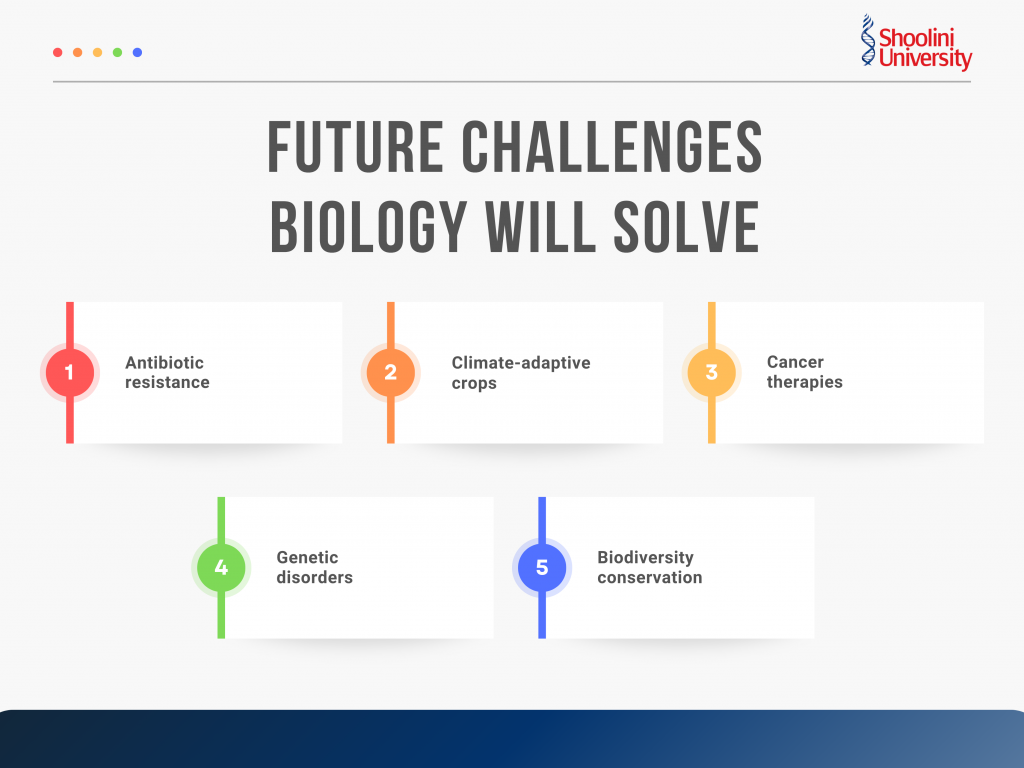
Both disciplines contribute to scientific progress. Both open pathways for research and innovation. And both remain important in solving the challenges of the future.
In the end, the right choice depends on a student’s interests, career goals, and learning style. Biology is expanding in many directions — and whether through life sciences or biotechnology, the opportunities continue to grow.
Sources:


