
Hospitality today is no longer limited to hotels alone. It has grown into a wide service economy that includes travel, events, real estate-led living experiences, and technology-driven service platforms. This shift is clearly reflected in global employment trends. According to the World Travel & Tourism Council (WTTC), the travel and tourism sector supported 357 million jobs worldwide in 2024, which is nearly one in every 10 jobs globally. This growth shows that hospitality now runs across the entire travel and service value chain, not just hotel buildings. At the same time, WTTC has warned about a growing workforce gap in hospitality.
This is important because it tells us that the industry is not only expanding in size but also changing in structure. New roles are emerging that require professionals to be multi-skilled, tech-aware, and capable of managing complex service systems. As hotels grow into lifestyle brands, events infrastructure expands, and technology reshapes service delivery, hotel management careers are increasingly moving beyond traditional hotel roles.
How Hospitality Is Expanding
Hospitality is expanding in multiple directions at the same time, and each shift is creating new types of work. Hotel brands are growing rapidly in India, but not just by adding more rooms. Global chains such as Hilton have announced plans to significantly expand their presence in India over the next few years, while Hyatt continues to sign new properties across major and emerging cities. This kind of expansion requires much more than front-office or housekeeping staff. It creates demand for professionals in brand operations, new hotel openings, guest-experience planning, training, partnerships, and quality management. These roles support hotels at a strategic and operational level rather than at a single property.
At the same time, hotel companies are entering real estate-led formats, especially branded residences and mixed-use developments. In these projects, hotel brands manage services in premium residential spaces, offering hotel-style living with concierge, wellness, and facilities management. In India, such projects are already underway, including developments by Indian Hotels Company Limited that combine hotels with luxury residences. This crossover has created roles that sit between hospitality operations and property management, such as resident experience managers, service quality heads, and facilities operations leaders. Mainstream media in India has also highlighted how housing projects are adopting hotel-style clubhouses and offering lifestyle services, thus increasing the demand for hospitality skills outside hotels.
Another major shift is the rise of large convention centres and business events, often referred to as the MICE segment. Cities are investing heavily in event infrastructure, and hospitality growth is increasingly linked to conferences, exhibitions, and global meetings. A recent example is the hospitality development around Delhi’s Yashobhoomi convention hub, which shows how hotels and hospitality services are being driven by event infrastructure and not just by leisure travel. These spaces require professionals who can manage guest flow, logistics, banqueting operations, vendor coordination, and large-scale on-ground experiences.
Technology is also reshaping hospitality in a major way. Many service functions are now handled remotely through digital platforms. Hospitality technology companies are running guest support, reservation systems, and hotel operations services from central locations in India for hotels across the world. This has created hospitality jobs that do not sit inside hotels but still rely strongly on hospitality knowledge. Roles such as remote guest support, operations coordination, property-tech help desks, and system troubleshooting are becoming common. This shift matters because it shows that hospitality careers are no longer limited by physical location.
Hotel Management Careers Beyond Hotels
Due to these shifts, hotel management careers today extend into several non-hotel roles. Some of the most important ones include:
- Hospitality Technology and Operations Support
This is one of the fastest-growing areas. Professionals work with hospitality-tech platforms that manage reservations, property management systems, guest communication tools, and service recovery. Roles include remote guest support, operations coordination, system troubleshooting, and service analytics. These jobs combine hospitality knowledge with technology and are often based in corporate or tech environments rather than hotels.
- Brand Operations and Expansion Teams
As hotel chains grow, they need professionals to support new openings, maintain brand standards, train teams, and manage partnerships. These roles work across multiple properties and focus on consistency, quality, and experience design rather than daily hotel operations.
- Branded Residences and Lifestyle Management
Hospitality professionals manage services in luxury residential projects run by hotel brands. This includes concierge services, facilities operations, wellness coordination, and resident engagement. These careers sit at the intersection of hospitality, real estate, and lifestyle services.
- Events, Conventions, and Experience Management
Large venues and business events require hospitality-trained managers to handle guest experience, logistics, food services, and vendor coordination. These roles are central to the growing events economy and are no longer limited to hotels.
Together, these roles show how hotel management careers have moved into a broader service ecosystem that values experience, systems, and people management.

Education and Industry Readiness
When it comes to hospitality education, the quality of training, industry exposure, and the learning environment matter as much as the degree itself. Shoolini University has emerged as a strong option for students looking for an industry-aligned education in Hospitality and Hotel Administration. The university is ranked No.1 among private universities in India by QS World University Rankings and No.2 by the Times Higher Education (THE), reflecting its focus on academic quality and student outcomes.
The Shoolini Business School offers a three-year BSc in Hospitality & Hotel Administration that balances classroom learning with hands-on training. The program covers all core areas of hotel operations, including front office, housekeeping, food and beverage service, and food production. This structure helps students clearly understand how hospitality operations function at a professional level.
A key strength of the program is its practical training environment. Students learn through live labs and in-house hospitality facilities such as Shoolini Chalet and Yogananda Ville, where they practice real operational tasks in working settings. This exposure builds confidence, discipline, and workplace readiness early in the course.
After the third semester, students complete six months of industrial training with reputed five-star hotels across India. These include brands such as Hyatt Regency, Grand Hyatt, Radisson, The Lalit, Jaypee Hotels and Resorts, The Park, and Glenview Resorts. This training allows students to apply classroom learning in real hotel environments and understand professional service standards.
The curriculum follows national and international benchmarks and also integrates essential business management concepts. In addition, students benefit from skill-focused initiatives such as mentorship programs, live projects, and the SPRINT bootcamp, which prepares them for real workplace challenges.
Shoolini University also provides global exposure through more than 250 international collaborations. Hospitality students can explore opportunities such as international internships and semester exchange programs to gain insight into global hospitality practices. Alongside this, placement support begins early, guiding students toward suitable opportunities across the hospitality and service sectors.
Conclusion
Hospitality today is much larger than hotels alone. With growth in tourism, events, lifestyle living, and technology-driven services, hotel management careers have expanded into new and meaningful directions. For students who develop the right skills and understanding of this evolving industry, hospitality offers flexible, long-term, and future-ready career opportunities beyond traditional hotel roles.
FAQs:
1. Is hotel management only about hotel jobs?
No. Graduates work in airlines, event management, luxury retail, cruise lines, and corporate services.
2. Does hotel management require strong communication skills?
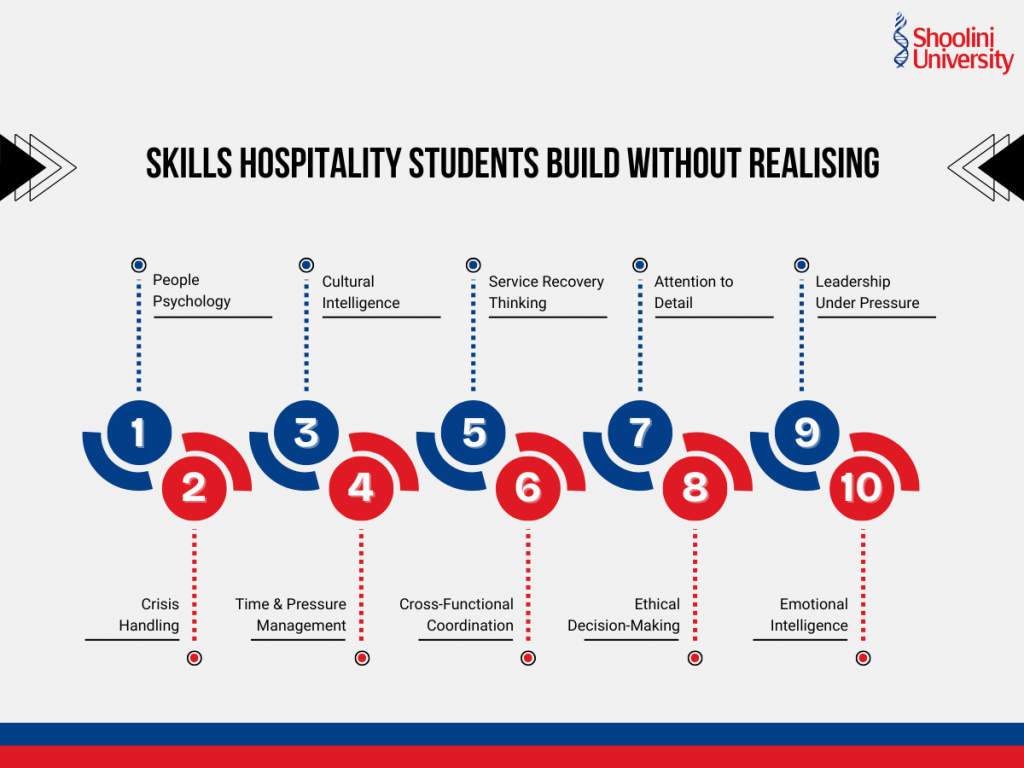
Yes. Communication, customer handling, and teamwork are core skills developed during the course.
3. Are international opportunities available after hotel management?
Yes. Hospitality degrees are globally recognised and open international career pathways.
4. Is hotel management suitable for students who enjoy practical learning?
Absolutely. The course includes hands-on training, internships, and real-world exposure.
5. Can hotel management students move into managerial roles later?
Yes. With experience and higher education, graduates often transition into leadership and management roles.
Sources: