





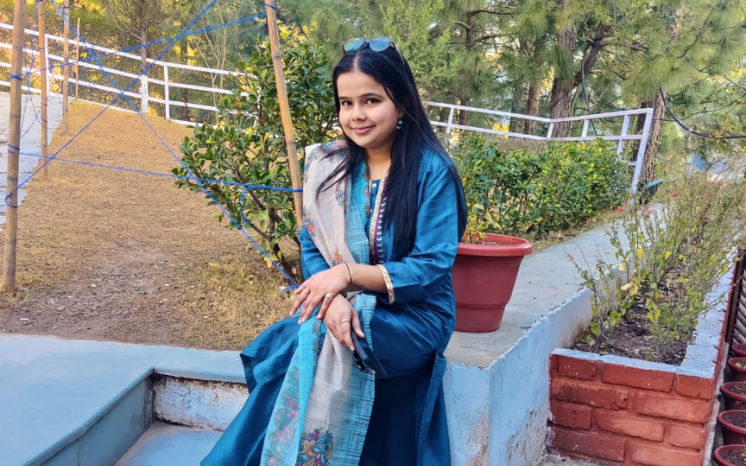
Why waste resources when you can reuse them? That's exactly what Shoolini University's PhD scholar Nandini Rai is doing with her groundbreaking research in Biofloc technology. Her work has led to two patent filings, one of which has been granted. It offers a smarter, more sustainable way to farm fish.
Her first patent, granted in August 2024, introduces a specialised Biofloc process for Common Carp. The second, filed for Pangasius (Pangas), expands its application. By using a smart blend of carbon sources, her method enhances water quality, recycles nutrients, and reduces reliance on external fish feed—making fish farming cleaner, greener, and more efficient. Driven by her passion and hard work, Nandini is now doing her Postdoc at the National Taiwan Ocean University.
What is Biofloc Technology?
Biofloc technology is a sustainable fish farming method that uses naturally occurring microorganisms—bacteria, algae, and zooplankton—to create clusters, or 'flocs.' These flocs serve as an additional food source for fish while keeping the water clean. The benefits include faster fish growth, reduced pollution, and lower feed costs.
Nandini tested this process with Common Carp and Pangasius. The results were impressive—Common Carp showed better growth, stronger immunity, and improved feed conversion. Pangasius, known for its rapid growth, demonstrated higher disease resistance and efficient nutrient absorption. Her research proves that Biofloc technology can be a game-changer for sustainable fish farming.
Why Aquaculture?
Nandini is from the small village of Patkhauli in Patna, Bihar. When asked why she chose Aquaculture as a topic, Nandini said, "I did my Master's degree with a specialisation in Fisheries. This is when I discovered my passion for aquaculture, particularly shrimp culture."
While interning at ICAR-CIFE, Mumbai, she explored shrimp farming, aquaponics, and other advanced fish farming techniques. Encouraged by her experiences, she pursued a PhD in Zoology at Shoolini University.
Under the guidance of Prof JM Julka, Former Joint Director at the Zoological Survey of India; Post Doc at the Smithsonian Institution, USA; and Director of Planning at Shoolini University, Nandini established the first experimental Biofloc culture in Himachal Pradesh.
Beyond research, she led the university's Environment and Sustainability Club, advocating for greener aquaculture practices.
Her work has been widely recognised—she has published research papers, authored a book chapter, and collaborated with leading scientists at ICAR-CIBA, Chennai, under the mentorship of Principal Scientist Akshaya Panigrahi.
A Bright Future in Global Aquaculture
Nandini's dedication has now taken her to National Taiwan Ocean University, where she is pursuing postdoctoral research under Executive Vice President and Distinguished Professor Fan Hua Nan. Her contributions are not only shaping sustainable aquaculture in India but are also gaining global recognition.
Her journey—from a small village to an international research stage—proves that innovation and passion can drive meaningful change. As she continues her work, she is paving the way for a sustainable future in aquaculture worldwide.
"My father's constant support and Julka Sir's wise mentorship always spurred me on. I'm thankful for their guidance and faith in me,” Nandini smiled.
Vaishali Thakur