

The career mistakes that cost students the most are rarely made after graduation. They happen during college, one semester at a time.
Not starting internships on time. Ignoring skill-building outside the classroom. Putting off placement preparation until the last year. Avoiding networking because it feels uncomfortable. Choosing a college based on fees instead of where its graduates end up.
None of these feels like mistakes when you are making them. That only becomes clear in the final semester — when there is little left to fix. This blog breaks down each one and what to do differently.
Are College Marks Enough to Get a Job in 2026?
No — and this is the most dangerous assumption students carry into college.
Most students spend three to four years optimising for grades and assume the rest will follow. It does not. According to Academic Mantra’s March 2026 analysis, 57% of Indian graduates cannot get hired despite 2.3 crore vacancies, because they graduate with theoretical knowledge but no practical application.
Employers in 2026 are not just looking at your marksheet. They are looking at what you have built, what you have done outside the classroom, and whether you can walk into a role and be useful from day one.
Marks matter. They are not enough on their own.
Why Is Not Doing an Internship the Biggest Career Mistake?
The hiring process has changed. Internships are no longer a bonus on a resume — they are the first thing recruiters look for, and most students are caught unprepared.
India’s PM Internship Scheme targeted 7 lakh placements. The first phase saw only 8,725 out of 28,000 selected candidates actually join, per the Amazing Workplaces April 2026 report. Less than 1% of applicants to the scheme completed it. The internship pathway is shrinking exactly when it matters most.
According to The Hans India’s May 2026 report, employers are now shifting from what candidates have studied to what they have actually done. Internships show communication, accountability, and real-world problem-solving — qualities that cannot be assessed through a resume or an interview.
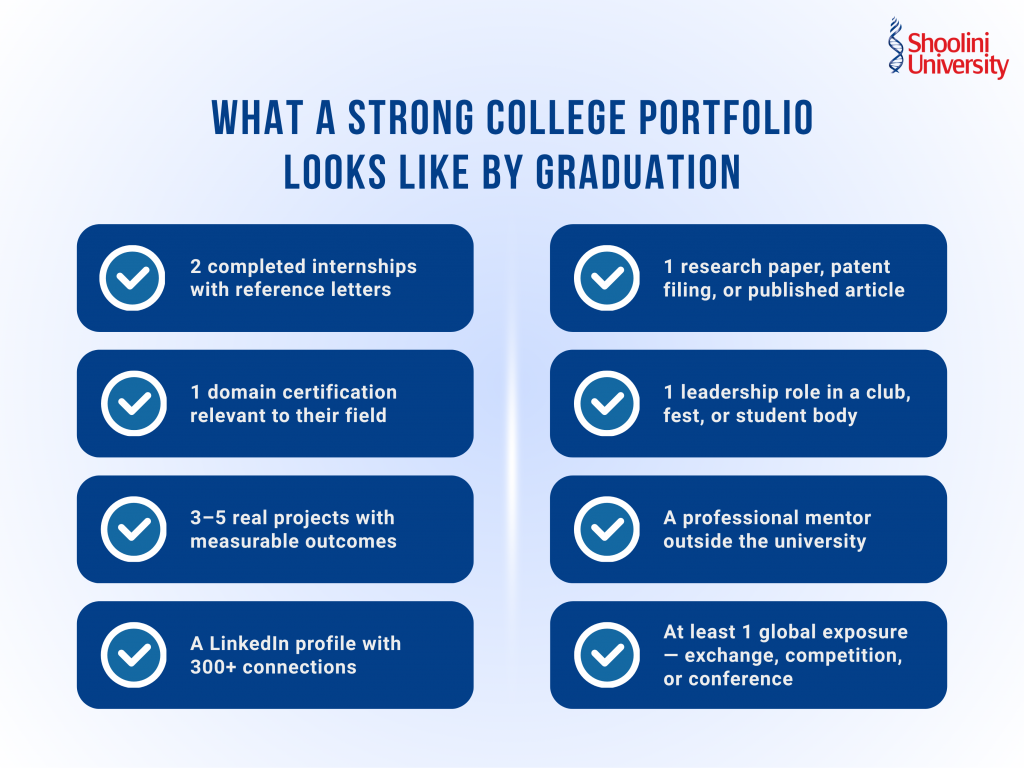
A student who graduates with a slightly lower GPA and two completed internships is in a significantly stronger position than one with perfect grades and no practical experience. The second year of college is not too early to start an internship. The first year is not too early to start building something.
What Happens When Students Wait Until Final Year to Plan Their Career?
They run out of time — and options.
Career planning is not a final-year activity. It is a four-year process. Students who start thinking about internships, certifications, and skill-building in their third or fourth year are competing against students who started in their first year.
The most common version of this mistake looks like this: spending the first two years focused entirely on academics, assuming that final-year placements will sort everything out. By the time placements arrive, there is no portfolio, no internship experience, and no industry exposure to show.
Start in year one. Even a small project, a short online certification, or a two-month internship in the first year builds a foundation that compounds over four years.

Is Ignoring Skill Building Outside the Classroom a Career Mistake?
Yes — and India’s education system makes it easy to fall into this trap.
India’s graduate employability fell to 42.6% in 2024, according to the Graduate Skill Index, as reported by Business Standard. The core reason is structural — most Indian universities focus on rote learning, outdated curriculum, and exam-centric education rather than developing analytical, creative, and practical skills.
This means the responsibility of building job-ready skills falls increasingly on the student. Employers in 2026 are prioritising communication skills, digital literacy, problem-solving, and practical experience over academic scores alone, per Career India’s December 2025 report.
Skills to build alongside your degree, regardless of what you are studying:
- Communication and presentation — Written and verbal, in professional settings
- Digital literacy — Basic data tools, AI tools, and productivity software
- Domain-specific tools — Python for tech, Tableau for analytics, Canva for design, Tally for commerce
- Critical thinking — The ability to analyse a problem and present a solution clearly
None of these are taught in Indian classrooms. All of them are asked for in Indian job interviews.
Is Avoiding Networking a Career Mistake Students Make?
Yes — and most students do not realise it until they are looking for their first job.
Networking is not about collecting LinkedIn connections. It is about building relationships with people who are ahead of you in your field — seniors, faculty, industry professionals, alumni — who can open doors, give honest advice, and refer you when opportunities come up.
Most students treat college as a classroom experience and miss the professional ecosystem around it entirely. Guest lectures get skipped. Alumni events go unattended. Faculty office hours are unused.
Students who build strong professional networks in college find better job roles quickly. They get proper guidance about where to go next. Start attending events. Ask questions. Stay in touch.
Does Choosing the Wrong College Matter to Your Career?
Yes — and it is one of the most expensive career mistakes a student can make.
Taking a large loan for a college with weak placement outcomes, limited industry connections, and an outdated curriculum is a mistake that takes years to recover from. The college you attend determines the quality of your internships, the companies that recruit on campus, the faculty who mentor you, and the peers you build your network with.
Before choosing a college, check three things specifically. First — who actually recruits from this campus, and what roles do they hire for? Second — does the university have real industry tie-ups or just logos on a website? Third — is career development built into the program or left entirely to the student?
Shoolini University — Where Career Mistakes Are Designed Out of the Degree:


Shoolini University is ranked No. 1 private university in India by QS World University Rankings and No. 2 by Times Higher Education World University Rankings.
Most career mistakes happen because universities leave career development entirely to the student. Shoolini has built it into the degree itself — across every program, from year one.
Here is how:
- Paid internships — built into the program: Students complete paid internships with companies like Deloitte, KPMG, ICICI Bank, and Unilever as a structured part of their degree — directly addressing the internship crisis, leaving thousands of Indian graduates behind.
- SPRINT and ATP programs: Stanford-inspired intensive bootcamps covering CV building, mock interviews, communication skills, and job readiness — running throughout the degree, so students are prepared long before placements begin.
- Corporate mentorship: Direct access to CEOs and senior industry leaders through structured guest lectures and one-on-one mentorship programs — the kind of professional network most students spend years building after graduation.
- Pehal Incubator: On-campus startup support for students who want to build their own venture — with structured mentorship to take an idea from concept to business before graduation.
- Summit Research Program: For science and engineering students, research begins in year one. Students build portfolios, file patents under the One Student One Patent policy, and publish research before they graduate. Alumni are now at Stanford, Johns Hopkins, Oxford, and the University of Tokyo.
- Global exposure: 250+ international tie-ups with universities in the USA, UK, Australia, South Korea, Italy, and more — giving students exchange programs and study abroad opportunities that build both skills and perspective.
- 1,900+ patents filed: Backed by the One Student One Patent policy under faculty ranked among the top 2% of scientists globally per Stanford University’s list.
The result is a student who graduates not just with a degree — but with internship experience, a professional network, a portfolio of real work, and the career readiness skills that 57% of Indian graduates currently lack.
The One Thing Every Student Should Do Differently Starting Today
Start before you feel ready.
The students who avoid career mistakes are not smarter or more talented. They just start earlier. They do their first internship before it feels urgent. They build their first skill before they need it on a resume. They attend their first industry event before they have a reason to network.
College time is genuinely valuable — and most students only realise that in the final semester when it is running out. The career mistakes covered in this blog are all avoidable. But they are only avoidable if you act before the pressure of the final year forces your hand.
Sources:
- Repute Today — India Faces Major Internship Crisis, March 29, 2026 https://www.reputetoday.com/business/india-faces-major-internship-crisis-young-professionals-left-without-practical-skills-and-jobs/8805/
- Amazing Workplaces — Fresher Jobs in India, April 13, 2026 https://amazingworkplaces.co/fresher-jobs-in-india-hiring-gap-causes-2026/
- Academic Mantra — Why 57% of Indian Graduates Cannot Get Hired, March 2, 2026 https://academicmantraservices.com/blog/why-57-of-indian-graduates-cant-get-hired-despite-23-crore-vacancies-2026-analysis
- The Hans India — The Internship Advantage, May 2026 https://www.thehansindia.com/hans/young-hans/the-internship-advantage-redefining-early-career-pathways-1073111
FAQs:
Q1. When should students start preparing for placements in college?
From year one — internships, certifications, and skill building compound over four years, and students who start early have a significant advantage over those who wait until final year.
Q2. How important are certifications during graduation?
Very important — domain-specific certifications in Python, data analytics, digital marketing, or accounting directly improve employability and starting salary, especially when combined with practical internship experience.
Q3. Do extracurricular activities help in job placements?
Yes — leadership roles in clubs, college fests, and competitions demonstrate communication, teamwork, and problem-solving skills that employers consistently look for beyond academic scores.
Q4. How can students build industry connections during college?
By attending guest lectures, staying in touch with alumni, participating in industry events, and making the most of mentorship programs and internships, all of which are more accessible during college than after graduation.
Q5. What support does Shoolini University provide for career preparation?
Shoolini offers paid internships, SPRINT and ATP bootcamps, corporate mentorship with CEOs and industry leaders, the Pehal Incubator for startup ideas, and global exchange programs — all built into the degree from year one.
Q6. How can students balance academics and skill development effectively?
By treating skill building as part of the degree rather than separate from it, dedicating a few hours each week to certifications, projects, or internships consistently delivers far better results than last-minute cramming in the final year.


