

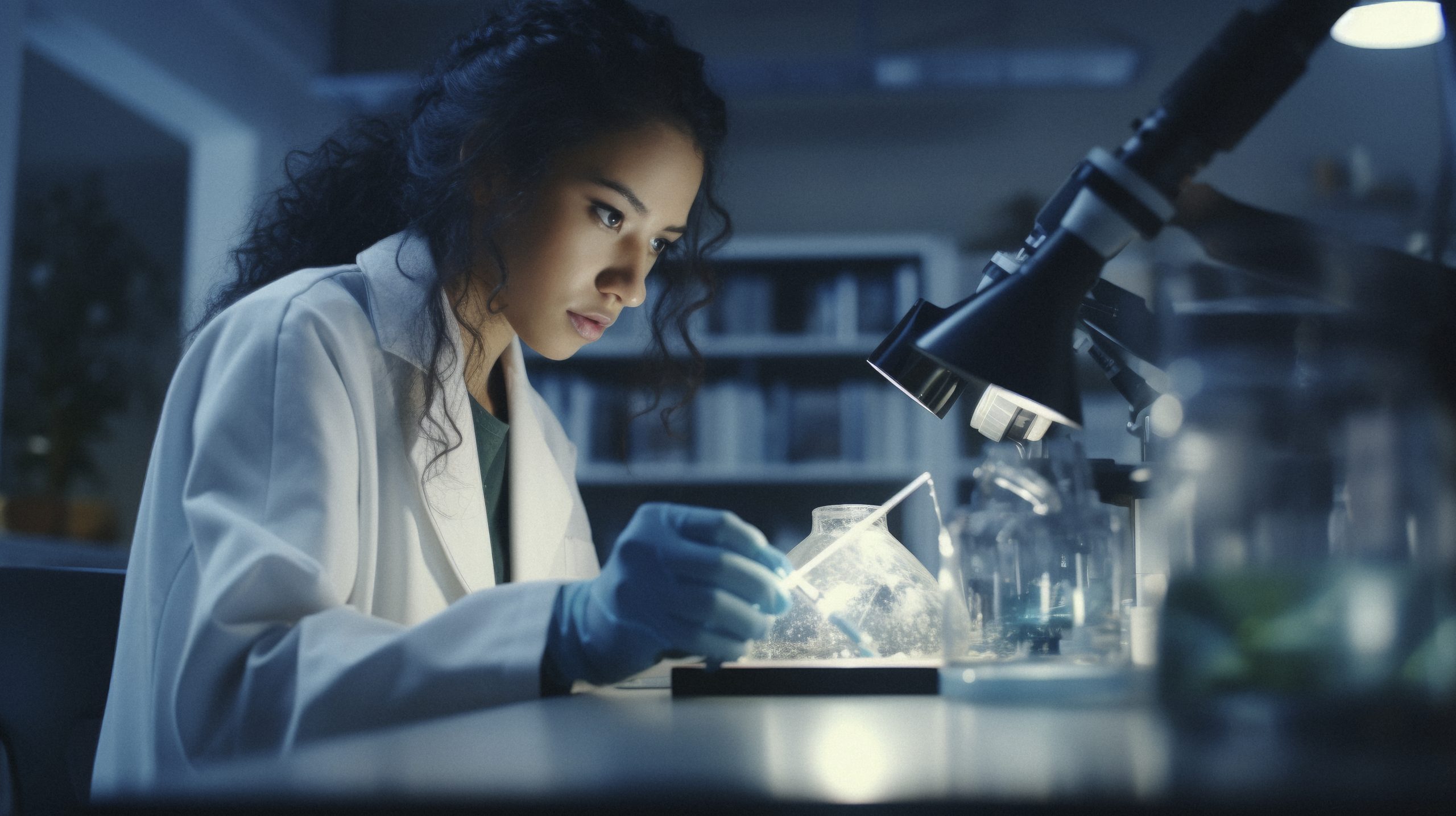
If you have ever been curious about how crimes are solved, how digital evidence is recovered, or how a single strand of DNA can convict a criminal — forensic science is where that curiosity becomes a career.
BSc Forensic Science is one of the few undergraduate degrees where science meets law, investigation, and justice in equal measure. And in 2026, it is also one of the most urgently needed qualifications in India’s criminal justice system.
India’s forensic labs are understaffed, the government is investing heavily to expand capacity, and new criminal laws have made forensic evidence legally mandatory in serious crime investigations. The result is a job market that is growing faster than universities can produce graduates.
This blog covers everything you need to know — career options, government jobs, salary expectations, and how to build a strong future in forensic science.
What Is BSc Forensic Science and What Do You Actually Study?
This 3-year undergraduate program trains you to collect, analyse, and present scientific evidence in criminal investigations.
Core subjects covered:
| Subject Area | What It Covers |
| Forensic Chemistry | Analysing substances, poisons, explosives, and trace evidence |
| DNA Profiling and Serology | Identifying individuals through biological samples |
| Digital and Cyber Forensics | Recovering and analysing digital evidence from devices |
| Forensic Toxicology | Detecting drugs, alcohol, and toxic substances in the body |
| Ballistics | Analysing firearms, ammunition, and gunshot wounds |
| Document Examination | Verifying handwriting, signatures, and questioned documents |
| Crime Scene Management | Evidence collection, chain of custody, scene reconstruction |
| Forensic Psychology | Understanding criminal behaviour and offender profiling |
The Forensic Aptitude and Caliber Test (FACT) 2026 — India’s national forensic certification — has added Crime Scene Management and Forensic Biological Sciences as two new domains, a direct reflection of where hiring demand is strongest right now.
Why Is the Demand for BSc Forensic Science Graduates So High Right Now?
Because India’s new criminal laws have made forensic science compulsory — yet the system lacks enough trained professionals.
Here is what is driving demand in 2026:
The BNSS Mandate: The Bharatiya Nagarik Suraksha Sanhita now legally requires forensic investigation for all serious crimes. This means every FSL, CFSL, and state lab is now expected to process significantly higher volumes of evidence — with the same number of scientists they had before the law changed.
The Backlog Crisis: According to a detailed April 2026 report by Budding Forensic Expert, 76% of all prisoners in India are undertrials — people not yet convicted — many of whom are waiting because forensic reports have not been filed. India’s prison occupancy is at 131% nationally, with some facilities at over 400%. A delayed forensic report can mean years of wrongful imprisonment. The government has now ordered states to clear forensic backlogs as a priority, which means labs need people immediately.
The Government’s 2026 Infrastructure Push
- 8 new CFSLs approved in Jammu, Rajasthan, Tamil Nadu, Bihar, UP, Odisha, Chhattisgarh, and Kerala
- ₹496.66 crore allocated for Mobile Forensic Vans in every district
- ₹116.5 crore under Nirbhaya Fund for cyber forensic training labs in 33 states and UTs
- National Forensic Data Centre being built by MHA with focus on women’s safety
This is not gradual growth. It is a system-wide expansion happening right now — and it needs trained graduates to fill it.
How Is Technology Changing Forensic Science in India?
AI, quantum computing, and 3D printing are turning forensic science into one of the most technologically advanced fields in the country.
According to The Daily Pioneer (April 28, 2026), India’s digital forensics market is projected to grow at 40% CAGR — reaching ₹11,829 crore ($1.39 billion) by FY 2029-30. That is more than three times the global average growth rate of 11%.
What is being built right now:
- Quantum computing for forensics — UP State Institute of Forensic Science is setting up India’s first Centre of Excellence in quantum computing for forensics in collaboration with QNu Labs under the National Quantum Mission. Quantum machine learning will be used to break complex cybercrime data chains
- 3D printing for crime scene reconstruction — Facilities for forensic facial reconstruction, ballistic reconstruction, and full 3D simulation of crime and accident scenes are being developed
- AI-driven legal intelligence — AI is now being used for evidence analysis, pattern recognition, and legal intelligence in forensic investigations
- e-Forensics platforms — MHA has built a national digital repository connecting all forensic labs across India for end-to-end chain-of-custody tracking
For BSc Forensic Science students, this means the job you graduate into will look very different from the job your seniors entered five years ago.
What Are the Government Job Opportunities After BSc Forensic Science?
The government sector is the largest and most stable employer for forensic science graduates in India.
| Organisation | Roles Available |
| Central Forensic Science Laboratories (CFSL) | Forensic Scientist, Junior Scientific Assistant |
| Directorate of Forensic Science Services (DFSS) | Scientific Officer, Digital Forensic Expert |
| State Forensic Science Laboratories (SFSL) | Junior Scientific Officer, Lab Analyst |
| CBI and NIA | Forensic Investigator, Evidence Analyst |
| Forensic Science Laboratory Delhi | Junior Scientific Assistant — Cyber, Chemistry, Ballistics, Biology |
| National Cyber Forensic Laboratories | Senior and Junior Digital Forensic Expert |
| Police Departments | Crime Scene Investigator, Forensic Support Officer |
| Courts and Judiciary | Expert Witness, Forensic Consultant |
As of March 2026, FSL Delhi is actively hiring Junior Scientific Assistants across Cyber Forensics, Chemistry, Ballistics, Lie Detection, and Biology divisions. DFSS is simultaneously recruiting for Deputy Directors and Digital Forensic Experts across six National Cyber Forensic Laboratories.
What Are the Private Sector Career Options After BSc Forensic Science?
Private sector opportunities are growing rapidly — especially in digital forensics and corporate investigations.
| Role | Sector |
| Cyber Forensic Analyst | IT companies, cybersecurity firms, banks |
| Digital Evidence Investigator | Law firms, insurance companies |
| Fraud Examiner | BFSI, accounting and audit firms |
| Forensic Consultant | Corporate legal teams, private investigation agencies |
| Forensic Lab Technician | Private hospitals, diagnostic chains |
| Document Examiner | Law firms, government contractors |
| Environmental Forensic Analyst | NGOs, regulatory agencies, environmental firms |
India’s digital forensics sector growing at 40% CAGR means private companies — banks, fintech firms, law firms, and cybersecurity companies — are all building in-house forensic investigation teams to handle fraud, data breaches, and litigation support.
What Is the Salary After BSc Forensic Science in India?
| Experience Level | Role | Salary Range |
| Fresher (0–2 years) | Junior Scientific Assistant, Lab Analyst | ₹3.5–6 LPA |
| Mid-level (3–5 years) | Forensic Scientist, Cyber Forensic Analyst | ₹7–12 LPA |
| Senior (6+ years) | Senior Forensic Scientist, Forensic Consultant | ₹15–25 LPA |
| Government (with experience) | Deputy Director CFSL, Senior Scientific Officer | ₹18–30 LPA + benefits |
Digital forensics and cyber forensic specialists consistently earn 30–40% more than traditional forensic lab roles due to the acute talent shortage in that specialisation.
What Higher Study Options Are Available After BSc Forensic Science?
A BSc is a strong foundation — but specialisation significantly improves career prospects.
- MSc Forensic Science — deepens expertise in a specific area like DNA analysis, toxicology, or document examination
- MSc Digital Forensics / Cyber Security — highest demand specialisation in 2026
- LLB — combines forensic knowledge with legal practice for roles as expert witnesses or forensic lawyers
- MBA in Healthcare or Legal Management — for those moving into management and compliance roles
- FACT / FACT Plus Exam — national forensic certification that fast-tracks government recruitment; applications open April–May 2026
How to Become a Forensic Scientist in India — Step by Step
- Complete 10+2 with Physics, Chemistry, and Biology or Mathematics
- Enrol in BSc Forensic Science at a recognised university
- Build lab skills — DNA analysis, digital forensics, toxicology
- Complete internship with a forensic lab, police department, or cybercrime cell
- Appear for FACT exam for government recruitment eligibility
- Apply to CFSL, SFSL, CBI, NIA, or state police departments
- Consider MSc or specialised certification for senior roles
Why Shoolini University Is the Best University for BSc Forensic Science in India
Shoolini University is ranked No. 1 private university in India by the QS World University Rankings and No. 2 by the Times Higher Education World University Rankings — with a clear focus on research-driven, outcome-based education.
For forensic science specifically, what matters is not just the ranking, but the infrastructure and faculty behind the program.
The BSc Forensic Science curriculum at Shoolini covers forensic biology, forensic chemistry, fingerprints, questioned documents, toxicology, cyber forensics, serology, basic DNA science, ballistics, and crime scene investigation — both traditional and emerging areas of forensic work.
What students get access to:
- 104+ laboratories and 11 Centres of Excellence — equipped with advanced forensic and analytical instruments
- Crime scene mock setups and real-case simulations — hands-on training that bridges theory and actual investigative practice
- Interdisciplinary ecosystem — academic connections across biotechnology, law, chemistry, psychology, and computer science built into the program
- International faculty — experts from Austria, Germany, South Korea, and NIPER contribute alongside Indian faculty from premier institutions
- 250+ international collaborations — students can access global exposure through exchange and study abroad programs
- Scholarships and fellowships — available at both undergraduate and postgraduate levels
The program is designed to prepare students for real investigative environments — not just examinations. The combination of lab depth, simulation-based training, and interdisciplinary learning gives Shoolini forensic graduates a strong edge when entering government labs, cyber crime cells, or private sector roles.
Is BSc Forensic Science the Right Degree for You?
Yes — if you want a career that combines science, technology, and real social impact.
Whether your interest is in DNA analysis, digital forensics, crime scene investigation, or cybercrime, a BSc Forensic Science degree gives you a direct, structured path into a field that is growing, government-backed, and genuinely meaningful.
BSc Forensic Science Admissions 2026 at Shoolini University are open. Apply now and begin your career in one of India’s most impactful professions.
FAQs:
Q1. Is BSc Forensic Science a good career in India?
Yes. India's new criminal laws now mandate forensic investigation for all serious crimes, creating an urgent demand for trained forensic professionals across government labs, police departments, and cybercrime units.
Q2. What is the difference between forensic science and criminology?
Forensic science applies scientific methods to analyse physical evidence from crime scenes. Criminology studies criminal behaviour, social patterns, and the justice system — it is more sociology than science.
Q3. Which government exams are useful after BSc Forensic Science?
The FACT exam by NFSU is the primary gateway for government forensic lab recruitment. UPSC, SSC, and state PSC exams also have openings for forensic science graduates in police and investigative departments.
Q4. What is the salary of a forensic scientist in India?
Entry-level forensic scientists earn ₹3.5–6 LPA. Mid-level professionals earn ₹7–12 LPA. Senior roles in government labs or private consulting pay ₹15–30 LPA and above.
Q5. Can forensic science graduates work with cybercrime units?
Yes. Cyber forensics is one of the fastest-growing specialisations — graduates can work with state cybercrime cells, National Cyber Forensic Laboratories, IT companies, and banks to investigate digital fraud and data breaches.
Q6. Is maths compulsory for forensic science careers?
Not always — most BSc Forensic Science programs accept PCB students. However, some specialisations like digital forensics and ballistics benefit from a mathematics background.
Q7. What skills are required for crime scene investigation roles?
Attention to detail, knowledge of evidence collection protocols and chain of custody procedures, basic chemistry and biology, and familiarity with forensic documentation and photography are the core skills required.
Q8. What lab and field training exposure do students get at Shoolini University?
Students train across 104+ laboratories with advanced forensic instruments, participate in crime scene mock setups and real-case simulations, and get research exposure through Shoolini's interdisciplinary centres and international faculty.
Q9. What are the best master's degree options after BSc Forensic Science?
MSc Forensic Science, MSc Digital Forensics, MSc Cyber Security, and LLB are the strongest options. Students can also pursue an MSc in Biotechnology or Chemistry for specialised forensic research roles.
Sources:


