





“Our goal is simple — we want students to learn entrepreneurship by doing. When they work with innovators on campus or with women building micro-enterprises in villages, they understand what it truly takes to turn an idea into a sustainable venture.”
This philosophy defines the MBA experience at Shoolini University. The campus hosts one of North India’s most active innovation ecosystems — a space where students take ideas off the page and turn them into practical models. They work with researchers, engineers, social entrepreneurs, and community groups, gaining a close view of how ventures take shape.
At the core of this ecosystem are dedicated incubation and innovation centres with national-level backing. The NIDHI Inclusive Technology Business Incubator (iTBI), supported by the Department of Science and Technology, focuses on technology commercialisation. The Atal Community Innovation Centre (ACIC-SU), funded by NITI Aayog, supports innovators and community-led projects. The Steve Jobs Innovation & Incubation Centre guides idea development, skill-building, and industry-linked projects. iHUB Shoolini, backed by the NM-ICPS initiative, drives technology development, hackathons, and entrepreneurship challenges.
MBA students are part of this environment from their first semester. They join interdisciplinary teams, take part in structured bootcamps, build prototypes, conduct primary market research, and pitch ideas to internal and external panels.
President & Dean, Shoolini Business School, Prof Munish Sahrawat, says this exposure shapes how students respond in real business environments. “Managers today need to adapt, think on their feet, and solve real problems. Our students grow when they work in spaces where ideas are tested — in incubators, in industry projects, and in community settings. That is where confidence and clarity develop,” he says.
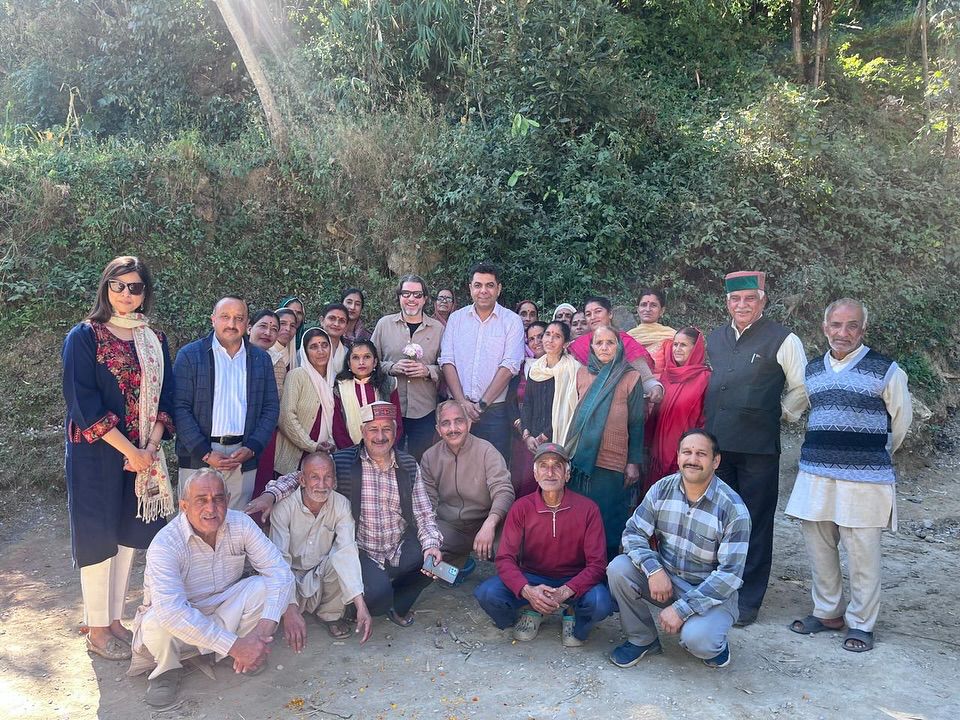
The Shoolini Pehal Foundation brings a strong social entrepreneurship lens to the program. Pragati, one of its key initiatives, is now in Phase 2 in Tikkar Village. The project supports rural women entrepreneurs with skills, equipment, and business planning. MBA students contribute through field visits, branding support, inventory planning, and market mapping. For them, this becomes direct training in consumer behaviour, pricing, micro-finance, and community-linked value chains.
“Pragati helps students see business from the ground up. Working closely with women in Tikkar Village gives them a clear sense of how real markets function and how small ideas can grow into income-generating ventures,” says Payal Jindal Khanna, Co-Lead, Shoolini Pehal Foundation and Deputy Director & Head of the Centre for Leadership Coaching.
Pro-Chancellor Vishal Anand says the work in Tikkar Village will guide future batches and can scale across communities. His message highlights the growing need for managers who understand both commercial and social enterprise models.
Inside the classroom, this approach continues. The program runs on an industry-aligned curriculum that offers access to EY-backed certifications, SEBI-approved ISM learning, Lean Six Sigma Green Belt, and LIBF global banking modules. Partnerships with the National Institute of Securities Markets (NISM), Satori Paths, and TÜV SÜD strengthen learning further.
With direct access to 6000+ CHROs through NHRDN, students gain real-time industry insights, mentorship, and leadership exposure. The program also offers AACSB-linked learning and more than 250 global collaborations, including semester-abroad options.
The teaching model is equally hands-on. MBA Launchpad SPRINT, the Stanford-inspired SPRINT Bootcamp each semester, ATP, and multiple live projects ensure that students analyse data, work in teams, design solutions, and present to industry panels with clarity. Interactions with CXOs, global leaders, and faculty from McKinsey, ISB, Stanford, Oxford, IITs, and IIMs give them a grounded view of contemporary business thinking.
Placement results mirror this preparation. The MBA program consistently achieves 100% placements, with more than 250 organisations — including Bank of America, HDFC Bank, ICICI Bank, Piramal, Mercer, KPMG, Byju’s, Vardhman, Trident Group, and Jaro Education — hiring from campus. This is driven by Shoolini’s ‘Mission 130’ model, which targets 100% placements with 30% in top international companies. Many students also run their own ventures on campus in areas such as fitness, consultancy, and product innovation.
Together, these elements create an environment where entrepreneurship is lived every day. Students identify opportunities, work with diverse teams, engage with communities, and develop solutions with real value. They graduate with a balanced understanding of innovation, feasibility, and market expectations.
For aspirants who want an MBA that integrates incubation, global exposure, corporate access, and community engagement, the Shoolini model offers a strong, practical fit. This is a campus where ideas are tested, ventures grow, and future leaders learn through action — every single day.